Philadelphia Blazers, Vancouver Blazers, Calgary Cowboys, World Hockey Association (WHA)
The Complete World Hockey Association
www.surgent.net/wha
|
Miami Screaming Eagles 1971-72 (never played)
Philadelphia Blazers 1972-73
Vancouver Blazers 1973-74 to 1974-75
Calgary Cowboys 1975-76 to 1976-77
Owners
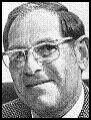
Bernard Brown
| 
James Cooper
| 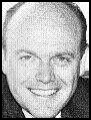
Jim Pattison
| 
Bill Sleiman
| 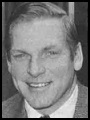
Bill Hay
|
Rinks

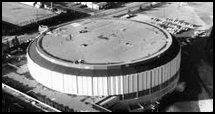
Philadelphia Civic Center
1972 to 1973
| 
Pacific Coliseum
1973 to 1975
| 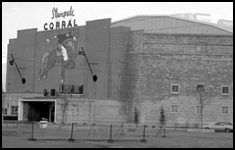
Calgary Stampede Corral
1975 to 1977
|
Seasons & Leaders
1972-73
Philadelphia
Record
38-40-0, 76 pts
Coach
Phil Watson
John McKenzie
Goals
61, Danny Lawson
50, Andre Lacroix
Assists
74, Andre Lacroix
50, John McKenzie
Points
124, Andre Lacroix
106, Danny Lawson
Penalty Min.
185, Jim Cardiff
157, John McKenzie
Wins
33, Bernie Parent
Goals Against
3.61, Bernie Parent
Shutouts
2, Bernie Parent
| |
1973-74
Vancouver
Record
27-50-1, 55 pts
Coach
Phil Watson
John McKenzie
Andy Bathgate
Goals
50, Danny Lawson
38, Claude St. Sauveur
Assists
62, Bryan Campbell
38, Danny Lawson
38, John McKenzie
Points
89, Bryan Campbell
88, Danny Lawson
Penalty Min.
191, Colin Campbell
188, Jim Cardiff
Wins
22, Pete Donnelly
Goals Against
3.80, Pete Donnelly
Shutouts
3, Pete Donnelly
| |
1974-75
Vancouver
Record
37-39-2, 76 pts
Coach
Joe Crozier
Goals
33, Danny Lawson
29, Bryan Campbell
Assists
43, Danny Lawson
37, John McKenzie
Points
76, Danny Lawson
63, Bryan Campbell
Penalty Min.
159, Rick Jodzio
128, Butch Deadmarsh
Wins
33, Don McLeod
Goals Against
3.34, Don McLeod
Shutouts
1, Don McLeod
| |
1975-76
Calgary
Record
41-35-4, 86 pts
Coach
Joe Crozier
Harry Howell
Goals
44, Danny Lawson
42, Ron Chipperfield
Assists
52, Danny Lawson
41, Ron Chipperfield
Points
96, Danny Lawson
83, Ron Chipperfield
Penalty Min.
196, Butch Deadmarsh
137, Rick Jodzio
Wins
30, Don McLeod
Goals Against
3.07, Wayne Wood
Shutouts
1, Don McLeod
1, Wayne Wood
| |
1976-77
Calgary
Record
31-43-7, 69 pts
Coach
Joe Crozier
Goals
30, Lynn Powis
27, Ron Chipperfield
Assists
32, Warren Miller
30, Lynn Powis
Points
60, Lynn Powis
55, Warren Miller
Penalty Min.
120, Peter Driscoll
61, Rick Jodzio
Wins
25, Don McLeod
Goals Against
3.40, Don McLeod
Shutouts
3, Don McLeod
|
Complete Roster & Regular Season Scoring Totals
| Player (G: Goaltender)
| Games
| Goals
| Assists
| Points
| Penalty Min.
|
|
Lawson, Danny | 378 | 212 | 197 | 409 | 140 |
|
Campbell, Bryan | 229 | 81 | 144 | 225 | 159 |
|
McKenzie, John | 179 | 65 | 125 | 190 | 312 |
|
Chipperfield, Ron | 234 | 88 | 88 | 176 | 94 |
|
Burgess, Don | 214 | 61 | 76 | 137 | 42 |
|
Lacroix, Andre | 78 | 50 | 74 | 124 | 83 |
|
St. Sauveur, Claude | 165 | 63 | 56 | 119 | 89 |
|
Deadmarsh, Butch | 155 | 46 | 53 | 99 | 401 |
|
Driscoll, Peter | 172 | 42 | 49 | 91 | 287 |
|
Plumb, Ron | 156 | 16 | 73 | 89 | 106 |
|
Morrison, George | 142 | 36 | 51 | 87 | 23 |
|
Tannahill, Don | 155 | 35 | 46 | 81 | 14 |
|
Walton, Rob | 105 | 32 | 48 | 80 | 30 |
|
Powis, Lynn | 84 | 34 | 40 | 74 | 48 |
|
Sentes, Dick | 101 | 35 | 38 | 73 | 41 |
|
Herriman, Don | 78 | 24 | 48 | 72 | 63 |
|
Harris, Hugh | 88 | 28 | 43 | 71 | 38 |
|
Migneault, John | 143 | 35 | 36 | 71 | 77 |
|
Evans, Chris | 156 | 10 | 47 | 57 | 110 |
|
Terbenche, Paul | 198 | 14 | 42 | 56 | 62 |
|
Miller, Warren | 83 | 23 | 32 | 55 | 51 |
|
Israelson, Larry | 105 | 22 | 31 | 53 | 36 |
|
O'Donoghue, Don | 137 | 24 | 29 | 53 | 63 |
|
Miszuk, John | 148 | 4 | 47 | 51 | 123 |
|
Cardiff, Jim | 200 | 4 | 47 | 51 | 398 |
|
Rupp, Duane | 114 | 3 | 42 | 45 | 78 |
|
Myers, Murray | 93 | 23 | 21 | 44 | 32 |
|
Pelyk, Mike | 75 | 14 | 26 | 40 | 121 |
|
Leiter, Bob | 51 | 17 | 17 | 34 | 8 |
|
Price, Pat | 68 | 5 | 29 | 34 | 15 |
|
Kryskow, Dave | 45 | 16 | 17 | 33 | 47 |
|
Lacombe, Francois | 71 | 3 | 28 | 31 | 62 |
|
Jodzio, Rick | 137 | 15 | 16 | 31 | 357 |
|
Spencer, Irv | 73 | 2 | 28 | 30 | 49 |
|
Plante, Michel | 92 | 16 | 14 | 30 | 37 |
|
McLeod, Don (G) | 202 | 0 | 30 | 30 | 20 |
|
Adair, Jim | 70 | 12 | 17 | 29 | 10 |
|
Hull, Steve | 60 | 11 | 17 | 28 | 6 |
|
Ford, Mike | 54 | 5 | 20 | 25 | 14 |
|
Campbell, Colin | 78 | 3 | 20 | 23 | 191 |
|
Jones, Jimmy | 81 | 14 | 9 | 23 | 62 |
|
Chernoff, Mike | 39 | 11 | 10 | 21 | 4 |
|
Meloche, Denis | 45 | 7 | 14 | 21 | 18 |
|
Delorenzi, Ray | 42 | 8 | 12 | 20 | 4 |
|
MacSweyn, Ralph | 56 | 2 | 18 | 20 | 52 |
|
Campeau, Rychard | 82 | 1 | 18 | 19 | 74 |
|
Caffery, Terry | 21 | 5 | 13 | 18 | 4 |
|
Keogan, Murray | 38 | 7 | 11 | 18 | 19 |
|
Lapierre, Camille | 33 | 5 | 12 | 17 | 2 |
|
Lemieux, Richard | 33 | 6 | 11 | 17 | 9 |
|
Arbour, John | 37 | 1 | 15 | 16 | 38 |
|
Kirk, Gavin | 15 | 7 | 8 | 15 | 14 |
|
Boudreau, Michel | 36 | 8 | 7 | 15 | 4 |
|
Hatoum, Ed | 37 | 3 | 12 | 15 | 8 |
|
Hutchison, Dave | 97 | 0 | 15 | 15 | 185 |
|
Haas, Derek | 30 | 5 | 9 | 14 | 6 |
|
Ward, Ron | 16 | 5 | 7 | 12 | 2 |
|
Beaudoin, Serge | 30 | 1 | 11 | 12 | 39 |
|
Connelly, Wayne | 25 | 5 | 6 | 11 | 4 |
|
Gellard, Sam | 28 | 7 | 4 | 11 | 15 |
|
Ketola, Veli-Pekka | 17 | 4 | 6 | 10 | 2 |
|
Bennett, John | 34 | 4 | 6 | 10 | 18 |
|
McCulloch, Don | 51 | 1 | 9 | 10 | 42 |
|
Lukowich, Bernie | 21 | 5 | 3 | 8 | 18 |
|
Bathgate, Andy | 11 | 1 | 6 | 7 | 2 |
|
Locas, Jacques | 22 | 3 | 4 | 7 | 2 |
|
Sanderson, Derek | 8 | 3 | 3 | 6 | 69 |
|
Micheletti, Joe | 14 | 3 | 3 | 6 | 10 |
|
Hurley, Paul | 34 | 0 | 6 | 6 | 32 |
|
Shmyr, John | 39 | 1 | 5 | 6 | 43 |
|
Henry, Pierre | 19 | 2 | 3 | 5 | 13 |
|
Mayer, James | 21 | 2 | 3 | 5 | 0 |
|
Harker, Derek | 27 | 0 | 5 | 5 | 46 |
|
Olds, Wally | 28 | 0 | 5 | 5 | 6 |
|
Reed, Bill | 29 | 0 | 5 | 5 | 14 |
|
Gravel, John | 8 | 1 | 3 | 4 | 0 |
|
Serviss, Tom | 8 | 2 | 1 | 3 | 2 |
|
Deschamps, Andre | 9 | 1 | 2 | 3 | 19 |
|
McNamee, Pete | 14 | 2 | 1 | 3 | 15 |
|
Polano, Nick | 17 | 0 | 3 | 3 | 24 |
|
Howell, Harry | 31 | 0 | 3 | 3 | 6 |
|
Walsh, Brian | 5 | 0 | 2 | 2 | 12 |
|
Tetreault, Jean | 6 | 1 | 1 | 2 | 0 |
|
Greig, Bruce | 7 | 1 | 1 | 2 | 10 |
|
Westrum, Pat | 9 | 0 | 2 | 2 | 23 |
|
Boyd, Jim | 13 | 0 | 2 | 2 | 6 |
|
Morin, Wayne | 13 | 2 | 0 | 2 | 25 |
|
Pesut, George | 17 | 2 | 0 | 2 | 2 |
|
Gruen, Danny | 1 | 1 | 0 | 1 | 0 |
|
Gulka, Bud | 5 | 1 | 0 | 1 | 10 |
|
Gratton, Bill | 6 | 0 | 1 | 1 | 2 |
|
Rouleau, Michel | 6 | 0 | 1 | 1 | 15 |
|
Paiement, Pierre | 8 | 1 | 0 | 1 | 18 |
|
Mosdell, Wayne | 9 | 0 | 1 | 1 | 12 |
|
Brown, Arnie | 10 | 0 | 1 | 1 | 13 |
|
Archambault, Yves (G) | 11 | 0 | 1 | 1 | 0 |
|
Donnelly, Pete (G) | 49 | 0 | 1 | 1 | 9 |
|
Parent, Bernie (G) | 63 | 0 | 1 | 1 | 36 |
|
Desjardine, Ken | 1 | 0 | 0 | 0 | 0 |
|
Gilmour, Dave | 1 | 0 | 0 | 0 | 0 |
|
Given, David | 1 | 0 | 0 | 0 | 0 |
|
Mott, Darwin | 1 | 0 | 0 | 0 | 0 |
|
Cottringer, Tom (G) | 2 | 0 | 0 | 0 | 0 |
|
Lindskog, Doug | 2 | 0 | 0 | 0 | 2 |
|
Sullivan, Danny (G) | 2 | 0 | 0 | 0 | 0 |
|
Chipchase, Jack | 3 | 0 | 0 | 0 | 2 |
|
Mercredi, Victor | 3 | 0 | 0 | 0 | 29 |
|
Bilodeau, Yvon | 4 | 0 | 0 | 0 | 2 |
|
Brown, Bob | 4 | 0 | 0 | 0 | 2 |
|
Mavety, Larry | 4 | 0 | 0 | 0 | 14 |
|
Jordan, Ric | 5 | 0 | 0 | 0 | 4 |
|
McCrimmon, Jim | 5 | 0 | 0 | 0 | 2 |
|
Baird, Ken | 7 | 0 | 0 | 0 | 2 |
|
Golembrosky, Frank | 8 | 0 | 0 | 0 | 0 |
|
Humphreys, Ed (G) | 8 | 0 | 0 | 0 | 0 |
|
Paille, Marcel (G) | 15 | 0 | 0 | 0 | 0 |
|
Bromley, Gary (G) | 28 | 0 | 0 | 0 | 2 |
|
Gardner, George (G) | 28 | 0 | 0 | 0 | 0 |
|
Wood, Wayne (G) | 30 | 0 | 0 | 0 | 4 |
|
|
Complete Playoff Scoring Totals
| Player (G: Goaltender)
| Games
| Goals
| Assists
| Points
| Penalty Min.
|
|
Evans, Chris | 10 | 5 | 5 | 10 | 4 |
|
Kirk, Gavin | 10 | 4 | 6 | 10 | 19 |
|
Chipperfield, Ron | 10 | 5 | 4 | 9 | 6 |
|
Powis, Lynn | 10 | 5 | 4 | 9 | 12 |
|
Lawson, Danny | 13 | 4 | 5 | 9 | 19 |
|
Driscoll, Peter | 10 | 2 | 5 | 7 | 41 |
|
Tannahill, Don | 10 | 2 | 5 | 7 | 8 |
|
Lukowich, Bernie | 10 | 4 | 3 | 7 | 8 |
|
Terbenche, Paul | 10 | 0 | 6 | 6 | 6 |
|
Morrison, George | 10 | 3 | 2 | 5 | 0 |
|
McKenzie, John | 4 | 3 | 1 | 4 | 8 |
|
Leiter, Bob | 3 | 2 | 0 | 2 | 0 |
|
Lacroix, Andre | 4 | 0 | 2 | 2 | 18 |
|
Plumb, Ron | 4 | 0 | 2 | 2 | 13 |
|
Lapierre, Camille | 4 | 0 | 2 | 2 | 0 |
|
Rupp, Duane | 7 | 0 | 2 | 2 | 8 |
|
Olds, Wally | 9 | 0 | 2 | 2 | 4 |
|
Campbell, Bryan | 3 | 0 | 1 | 1 | 8 |
|
Burgess, Don | 4 | 1 | 0 | 1 | 0 |
|
Herriman, Don | 4 | 1 | 0 | 1 | 14 |
|
O'Donoghue, Don | 4 | 0 | 1 | 1 | 0 |
|
Campeau, Rychard | 4 | 1 | 0 | 1 | 17 |
|
Westrum, Pat | 6 | 0 | 1 | 1 | 19 |
|
Deadmarsh, Butch | 8 | 0 | 1 | 1 | 14 |
|
Sentes, Dick | 8 | 0 | 1 | 1 | 8 |
|
Miller, Warren | 10 | 1 | 0 | 1 | 28 |
|
Miszuk, John | 10 | 0 | 1 | 1 | 10 |
|
McLeod, Don (G) | 10 | 0 | 1 | 1 | 4 |
|
Haas, Derek | 1 | 0 | 0 | 0 | 0 |
|
Parent, Bernie (G) | 1 | 0 | 0 | 0 | 0 |
|
Humphreys, Ed (G) | 1 | 0 | 0 | 0 | 0 |
|
Paille, Marcel (G) | 1 | 0 | 0 | 0 | 0 |
|
Jodzio, Rick | 2 | 0 | 0 | 0 | 14 |
|
Boudreau, Michel | 2 | 0 | 0 | 0 | 0 |
|
Howell, Harry | 2 | 0 | 0 | 0 | 2 |
|
Israelson, Larry | 3 | 0 | 0 | 0 | 0 |
|
Hutchison, Dave | 3 | 0 | 0 | 0 | 2 |
|
Archambault, Yves (G) | 3 | 0 | 0 | 0 | 0 |
|
Migneault, John | 4 | 0 | 0 | 0 | 0 |
|
Cardiff, Jim | 4 | 0 | 0 | 0 | 11 |
|
Spencer, Irv | 4 | 0 | 0 | 0 | 4 |
|
Plante, Michel | 4 | 0 | 0 | 0 | 2 |
|
Lacombe, Francois | 8 | 0 | 0 | 0 | 2 |
|
|
Complete Regular Season Goaltending
| Goaltender
| Games
| Minutes
| Goals
| Shutouts
| Record
| Average
|
|
McLeod, Don | 202 | 11419 | 649 | 5 | 88-96-10 | 3.41 |
|
Parent, Bernie | 63 | 3653 | 220 | 2 | 33-28-0 | 3.61 |
|
Donnelly, Peter | 49 | 2824 | 179 | 3 | 22-24-0 | 3.80 |
|
Wood, Wayne | 30 | 1312 | 75 | 1 | 13-7-1 | 3.43 |
|
Bromley, Gary | 28 | 1237 | 79 | 0 | 6-9-2 | 3.83 |
|
Gardner, George | 28 | 1590 | 125 | 0 | 4-21-1 | 4.72 |
|
Archambault, Yves | 11 | 523 | 44 | 0 | 2-7-0 | 5.05 |
|
Humphreys, Ed | 8 | 441 | 27 | 0 | 2-5-0 | 3.67 |
|
Paille, Marcel | 15 | 611 | 49 | 0 | 2-8-0 | 4.81 |
|
Cottringer, Tom | 2 | 122 | 8 | 0 | 1-1-0 | 3.93 |
|
Sullivan, Danny | 2 | 120 | 10 | 0 | 1-1-0 | 5.00 |
|
|
Complete Playoff Goaltending
| Goaltender
| Games
| Minutes
| Goals
| Shutouts
| Record
| Average
|
|
McLeod, Don | 10 | 579 | 37 | 0 | 5-5 | 3.83 |
|
Archambault, Yves | 3 | 153 | 11 | 0 | 0-2 | 4.31 |
|
Humphreys, Ed | 1 | 20 | 0 | 0 | 0-0 | 0.00 |
|
Paille, Marcel | 1 | 26 | 5 | 0 | 0-1 | 11.54 |
|
Parent, Bernie | 1 | 70 | 3 | 0 | 0-1 | 2.57 |
|
|
History
|
Miami was to be one of the original twelve teams in the new World Hockey Association. Dennis Murphy had co-owned and managed the Miami Floridians of the American Basketball Association in the early 1970s. Miami was a vibrant sports city with one glaring weakness: no major-league quality arena to house a hockey team (or a basketball team for that matter, as the Floridians went defunct in 1972).
Nevertheless, through Murphy's influence and connections, real-estate developer Herb Martin was granted the rights to a Miami team in 1971, primarily because of Martin's promise to build a modern arena, to be called the Executive Square Garden. Should Martin pull off the arena, the WHA would play its inaugural game in Miami.
The new team was named the Screaming Eagles and they were the first to sign a star player, goaltender Bernie Parent, most recently of the Toronto Maple Leafs, while also pursuing Boston Bruin forward Derek Sanderson. These moves, along with the flashy nickname, garnered the league some press during this time.
However, Martin could not complete the arena. This became clear in early 1972, and the Miami team went quiet, losing its charter in April 1972 after failing to post a required bond to the league.
A little over six weeks later, Bernard Brown and James Cooper assumed control of the Miami operation and relocated the team to Philadelphia, to go up against the NHL's Flyers. The new owners honored the contract signed by Parent and continued in the pursuit of Sanderson.
The new Blazers would play in the antiquated Philadelphia Civic Center, which was never designed for a hockey rink. That detail did not stop the Brown and Cooper from inking Sanderson to a $2.65-million contract, the biggest ever at the time. John McKenzie, a teammate of Sanderson's with Boston, also signed, to both play and coach.
Nothing went right for the Blazers. The team's first home game had to be postponed when the newly-installed ice plant malfunctioned, creating an ice sheet too brittle for hockey. The surfacer tore up chunks of the ice, forcing the cancellation of the game and prompting the fans in attendance to throw their commemmorative orange pucks onto the rink and toward unlucky players in protest.
Meanhwile, McKenzie and Parent suffered injuries during the first weeks of the season, McKenzie a fractured arm and Parent a fractured leg. McKenzie would act as coach, rotating with Phil Watson. The rest of the team, a collection of fringe NHLers, minor-leaguers and newly-graduated amateurs, stumbled out of the gate, losing 16 of their first 20 games.
Derek Sanderson was an entirely different matter. A capable forward with the Bruins, he was not the star-caliber player that he was touted to be. He was an effective defensive forward who excelled within a system, which suited him perfectly while with the Bruins. He was famous (notorious) primarily for his outspoken and often-controversial nature.
If he could have backed his statements with effective play and solid numbers, he may have got away with his behavior. But he too was hurt early in the season, injuring his back in late October. He played in 8 games, sat out while he healed, came back too quickly and re-injured his back. Already an easy person to dislike, Sanderson came to be seen, fairly or not, as the primary fault of the team. He and the Blazers would part ways in early 1973, allowing Sanderson to return to Boston.
Amid all this, the Blazers began to win regularly. McKenzie gave up on his dual player and coaching role, turning over the coaching to Watson full time. Watson, a hockey lifer with experience coaching in the NHL, knew how to get results. On the ice, Andre Lacroix, formerly of the Flyers, and Danny Lawson, formerly of the Buffalo Sabres, formed one of the most potent duos in the league. Lawson would lead all goal scorers with 61 for the season, and Lacroix would win the scoring crown, with 124 points.
After November 25th of 1972, the Blazers would finish the season with a 34-24-0 record. McKenzie returned and contributed 28 goals and 78 points. Parent would play in the team's final 57 games. Former NHLer Bryan Campbell scored 25 goals and 73 points. Former Eastern Leaguer Don Herriman, playing on the Lacroix-Lawson line, had 24 goals and 72 points. Remarkably, at season's end, the Blazers had secured third place and a playoff berth.
But the magic ended fast. Parent left the team one game into the team's playoff series with Cleveland, claiming the team defaulted on his contract. The Blazers lost the series and effectively quashed any support the team had in Philadelphia. It was almost certain they would relocate elsewhere.
Parent absolved himself of the Blazers and the WHA and returned to Philadelphia as a member of the Flyers. He would backstop the Flyers to two consecutive Stanley Cups in both the 1973-74 and 1974-75 seasons, registering an amazing 24 regular-season shutouts during this span. Meanwhile, the woebegone Blazers were heading west, to Vancouver.
The team was purchased by Jim Pattison, who planted the team in Vancouver, to play out of the Pacific Coliseum and go up against the NHL's Vancouver Canucks. There was still the belief that a strong WHA team could outdraw a weak NHL team in the same city. The Canucks, just in their fourth year at this time, had done little to distinguish themselves.
The Vancouver team retained the Blazer nickname, but lost Andre Lacroix, who refused to move with the team to Vancouver. He landed in New York and later, New Jersey, for the 1973-74 season. Danny Lawson stayed with the team and put up another fine season, with 50 goals. Bryan Campbell led the team with 89 points. New forwards Don Burgess (30 goals) and Claude St. Sauveur (38 goals) rounded out the attack.
But the Blazers regressed as a unit, winning just 27 games and losing 50. The team drew respectably, but had not clearly established themselves to the Vancouver fans, who still preferred the Canucks. The Blazers would play another season in Vancouver, now under the guidance of Joe Crozier.
The 1974-75 team improved, winning 37 games, but the offense regressed. Lawson led the team with a mere 33 goals, Bryan Campbell was second with 29. In nets, Don McLeod came over from Houston and played in nearly every game. Despite the team's improvement, the Canucks had improved even more and it was clear Vancouver wasn't big enough for two teams. The Blazers were again on the move.
Pattison looked one province over and took a gamble with Calgary. Calgary was one of Canada's bigger cities and had been courted by the WHA in 1971-72. They would be a natural rival to the Edmonton Oilers and they were a city with a strong hockey tradition ... but a city with no major-league arena. The new Cowboys, as the team was rebranded, would play in the 5,000-seat Corral.
Pattison (by this time including co-owners Bill Sleiman and Bill Hay) made no secret that placing the team in Calgary was a two-year deal. While there were no concrete plans to have a new arena built in Calgary as of 1975, there was much discussion about it. Perhaps the new Cowboys could be leverage to get the arena built. In the meantime, the team would play in the Corral and lose money.
The team itself was forming into a solid squad. Crozier ran the entire operation, scouting and signing players, and coaching the team during the games. Danny Lawson continued to be one of the league's top goal scorers, potting 44 during 1975-76. Goalie Don McLeod played in 63 games and contributed 13 assists, as well as almost scoring a goal on one occasion. Venerable Harry Howell skated in 31 games and served as an assistant coach. George Morrison and Don Tannahill came over from the Fighting Saints and contributed 25 goals each, and the team had its first winning record, 41-35-4, and third place in the Canadian Division, good enough for a playoff berth.
In the 1976 playoffs, the Cowboys squared off against the Quebec Nordiques. The two teams were diametric opposites. The Nordiques were a goal-scoring machine with five players collecting 100 or more points, while the Cowboys had no choice but to play a forechecking game to have a chance to win.
The two teams had played one another 16 times during the season, including five games in March alone. There was very little affection between the two teams. In the March games, brawls broke out often. The Nordiques had stocked up on fighters as well, including Gord Gallant, Curt Brackenbury and Pierre Roy.
In the second game, Rick Jodzio, a yound forward assigned to shadow Marc Tardif, leveled the Nordqiue center with a vicious check. Tardif fell to the ice and cracked his skull. He was out for the playoffs and his life was in danger in the immediate time being. This incited a brawl that had a true viciousness to it. Players were fighting to hurt one another. The fight lasted a half hour and was quelled only by police presence. Ten players received match penalties.
The Cowboys won this game and the series. The Nordiques were broken and dispirited. Fans were angry. This brawl was seen as an inevitable outcome during an era when goon hockey was promoted and all-out fights were common. The league would institute stricter rules regarding fighting. Tardif, fortunately, would recover sufficiently to play another seven seasons but not without suffering lifetime physical after-effects of the hit.
The team's second season in Calgary was not as successful. It was a streaky team. The Cowboys started the season 0-6-1, then won seven in a row. They could win at home but not at all on the road (5 road wins all season). A ten-game losing streak in March sealed the team's fate, the Cowboys finishing fifth in their division and out of the playoffs.
The two-year trial was now over. There was still no definitive plans to build a suitable arena in Calgary. There was no way the team could persist at the Corral. But by summer 1977, the WHA-NHL merger negotiations were taking place. The Calgary operation stayed intact to see how this would play out.
In its current state, the Cowboys were not going to be admitted into the NHL should the two leagues merge. Two other teams, the Phoenix Roadrunners and San Diego Mariners, were already defunct (Phoenix) or soon-to-be (San Diego). Indianapolis and Birmingham would not be admitted should merger happen, but they remained viable should the WHA convene to play in 1977-78.
The Cowboys essentially faded. They made some effort to sell season tickets for 1977-78 but failed to meet a self-imposed deadline. There was consideration to move the team or go silent for a year. They were still alive in the barest sense of the word when the merger vote took place in early August 1977. When it failed, the Cowboys simply disappeared.
Three years later, the two leagues now having merged, former WHA team-owner Nelson Skalbania bought control of the Atlanta Flames franchise and moved it to Calgary, to play at the Corral. But by this time, plans were in place for the new Saddledome to be built. Calgary was to be host of the 1988 Winter Olympics. The Flames could manage in the Corral with the knowledge that they'd have an actual home in a few years, a luxury the Cowboys never had.
At Best, Status Is Questionable • by George Bilych • Calgary Herald • August 12, 1977
The World Hockey Association, apparently, is still alive. Questionable, however, is the status of the Calgary Cowboys.
A communique from the Cowboys Thursday revealed they plan to be represented at the WHA's annual meeting, set for Montreal next week. It's assumed their position will finally be clarified at that time.
That the Cowboys are on their way out, however, appears to be a mere formality. All reports from other WHA centres since merger became nothing but a bad dream are unanimous in that none mention Calgary as a potential candidate for the 1977-78 season. And, there has been nothing viable forthcoming from the Cowboys' staff itself.
President Billy Hay has been away from the city vacationing the past week. There's been no official reaction from the Neonex tandem of Jim Pattison and Bill Sleeman. Joe Crozier maintains he's completely in the dark and is asking the same basic questions as is every other fan in the city.
But, the writing on the wall appears to be fairly legible. With the prospect of losing another million dollars should they operate and no apparent compensation in sight, they appear to be left with three options -- sell, fold or seek a leave of absence.
A WHA offical admitted Thursday that, while eight or nine different schedules have already been drawn up for the forthcoming season, none of them include Calgary.
To be considered, too, is the fact that the Cowboys don't have the pick of the dates at the Corral any more. Stampede general manager Bill Pratt admits most of the prize dates have been claimed by the junior Wranglers.
"We have enough dates to accommodate them," admitted Pratt, "but, I wouldn't consider many of them ideal. I've been in contact with the Neonex people throughout the summer, and, when the junior situation came up, was advised by them that we should continue negotiations with the Wranglers. Mind you, at that time, they (Cowboys) appeared very confident that merger would be accomplished. I haven't had any contact with them since merger talks fell apart."
Pratt indicated the Stampede Board was still anxiously awaiting the report from the Stanford research group regarding Corral expansion. That is due to arrive on his desk on October 1.
We recognize that a prime tenant such as a pro hockey team becomes a requisite when considering expansion of such a facility," added Pratt. "It's the familiar chicken or the egg bit again."
It will be interesting to see what route the WHA decides to steer when it meets next week. There have been suggestions that it forget completely about the NHL and try instead to attract the lucrative international market.
A closer relationship with teams from Czechoslovakia, Sweden, Finland and the Soviet Union is one direction it'll be investigating. While Alan Eagleson says it can't happen, rumor has it that the WHA is close to tying up as many as 16 games against this competition next winter. Expected to be announced soon, too, is a tour of Japan involving the Winnipeg Jets and the Soviet National Team.
While interesting times they may be, it's unlikely that Calgary will be a part of it.
|
_______________________________________
Home • Book • Credits & Legal Stuff
Reviews, Podcasts and Media
• Article: Color of Hockey: Alton White (The Hockey News), by William Douglas — March 8, 2020
• Review: US Sports History, by Rich Macales — Feb 6, 2021
• Podcast: Good Seats Still Available, by Tim Hanlon — Feb 28, 2021
• Podcast: Digital to Dice (Youtube), by Dave Gardner — July 3, 2022
(c) Scott Surgent