
The Mountains of Arizona
www.surgent.net |
| Black Mountain • Red Rocks Area |
• The Red Rocks of Sedona • Coconino Plateau • Yavapai County |
|
Date: October 22, 2011
• Elevation: 6,045 feet
• Prominence: 1,125 feet
• Distance: 6 miles
• Time: 2 hours and 50 minutes
• Gain: 1,450 feet
• Conditions: Sunny and warm
Arizona
•
Main
•
AZ P1K
•
PB
•
USGS BM Datasheet
For some reason, this tan-&-red-colored mesa north of Cottonwood and west of Sedona is called Black Mountain. It is an appendage of the Coconino Plateau, separated by erosion. Thus, it is now its own mountain, with over 1,100 feet of prominence. The top is flat and forested and apparently not a popular destination except for hunters.
I left Scottsdale at 10 a.m. and arrived into the general Sedona-Cottonwood area about two hours later. I got supplies and then drove toward Black Mountain. The day was dry and cloudless, and there's a road to the summit, so it was not necessary that I be hiking at dawn. I figured I would be up and down this peak in a few hours at most.
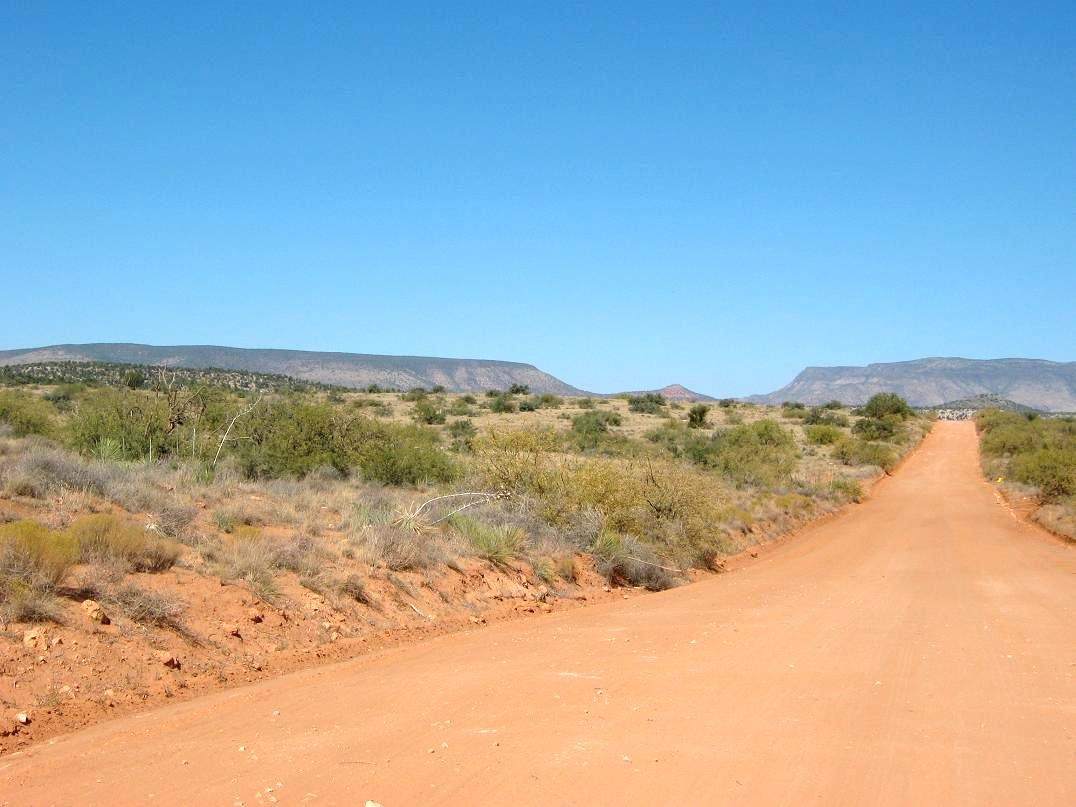
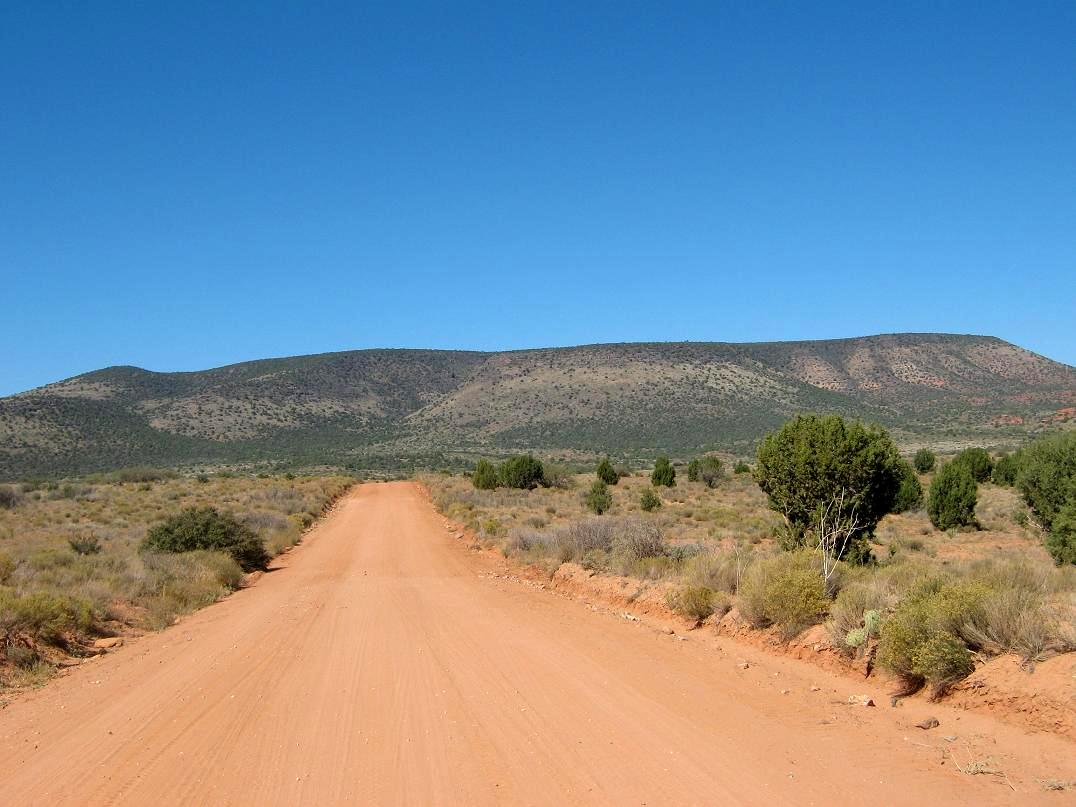
From Cottonwood, I followed AZ-89A north for two miles to Bill Gray Road, going north on this road and bypassing a big church. Coconino Forest Road 761 starts immediately where the main road ends. The road is now a wide dirt path, graded but quite sandy for stretches at a time. The sand caused me to yaw at times, and the dust cloud I kicked up was enormous.
I drove slightly less than 10 miles to place me due east of Black Mountain's main bulwark. I was at the junction of FR-761A, signed as Sacred Mesa Drive nearby a residence. I went left (west), the road now rocky and requiring 4-wheel drive to manage. I only covered about a mile. I parked at a junction of roads near a power line. One of the roads here was the one that would lead to the top.
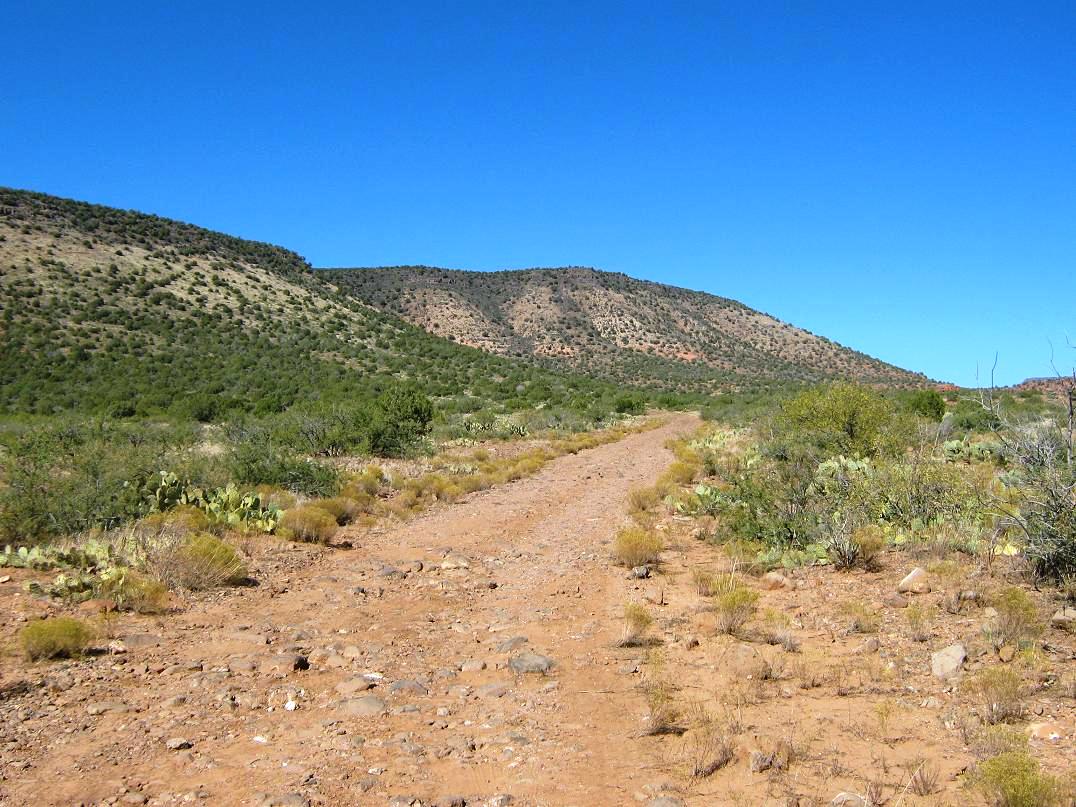
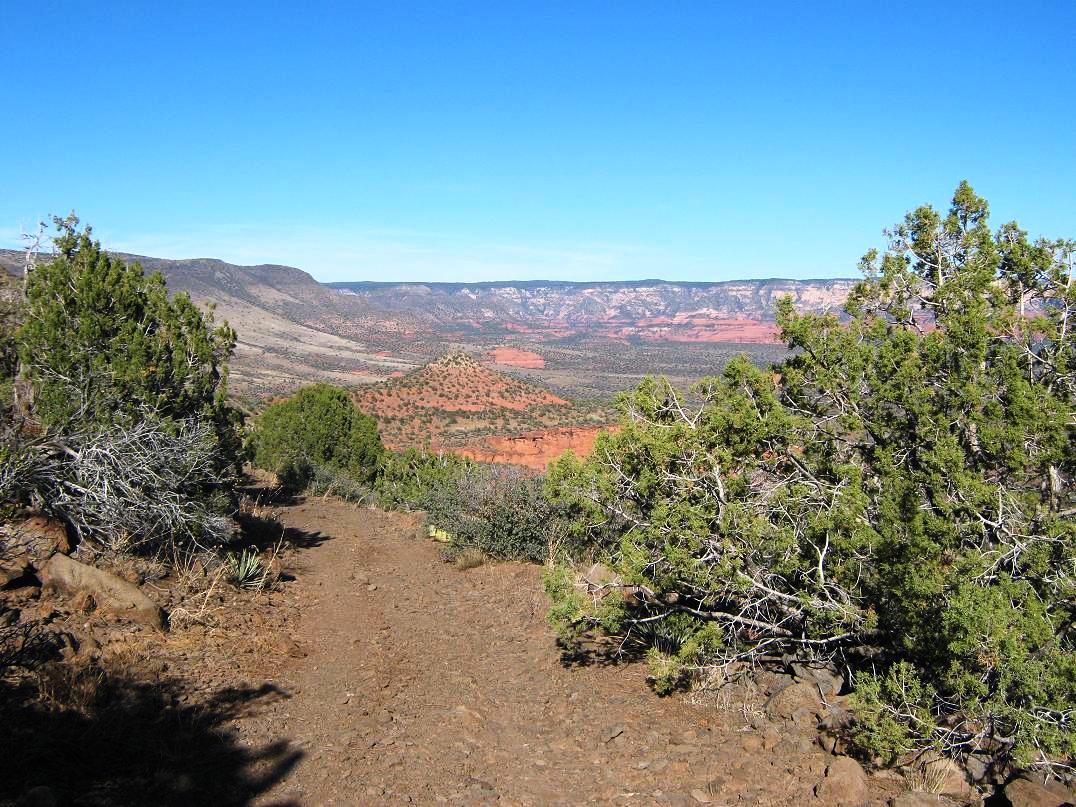
I locked up the truck and started hiking at 12:30 p.m., following FR-761A for about a quarter mile to FR-761C, which would be my route the whole way up. Here, the road hugs the side of the mesa, making three long switchbacks before surmounting the top. I covered about 1.5 miles to here. Now it was a matter of finding the "summit" atop this flat pinon-and-juniper woodland.
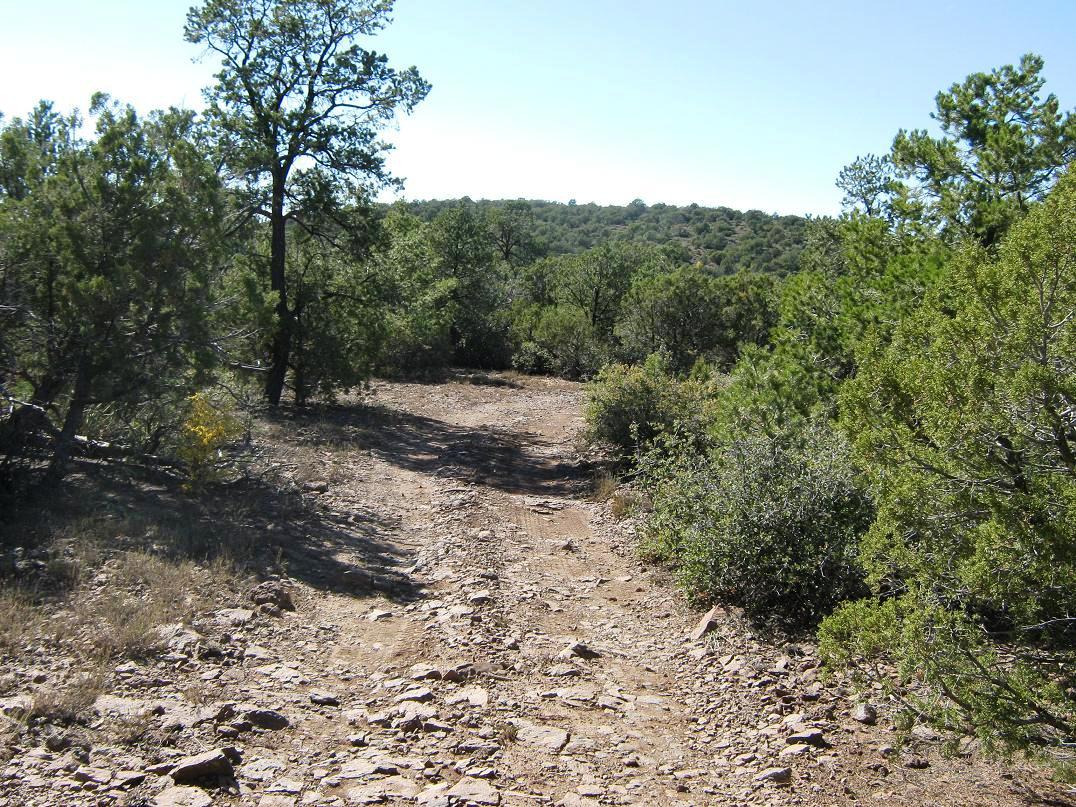
On top the mesa, I walked the road for about another mile as it gently rose to gain onto a rise marked with spot elevation 5,985 feet on the map. I walked and walked, eventually descending off this 5,985-foot hilltop, but the road started to meander away from the real top, which I could see to the west. Instead, the road bent south. I followed it for about 500 yards out of curiosity but quickly determined it was going somewhere else, not the top (as was shown on the map). So I returned to where I could again see the real top.
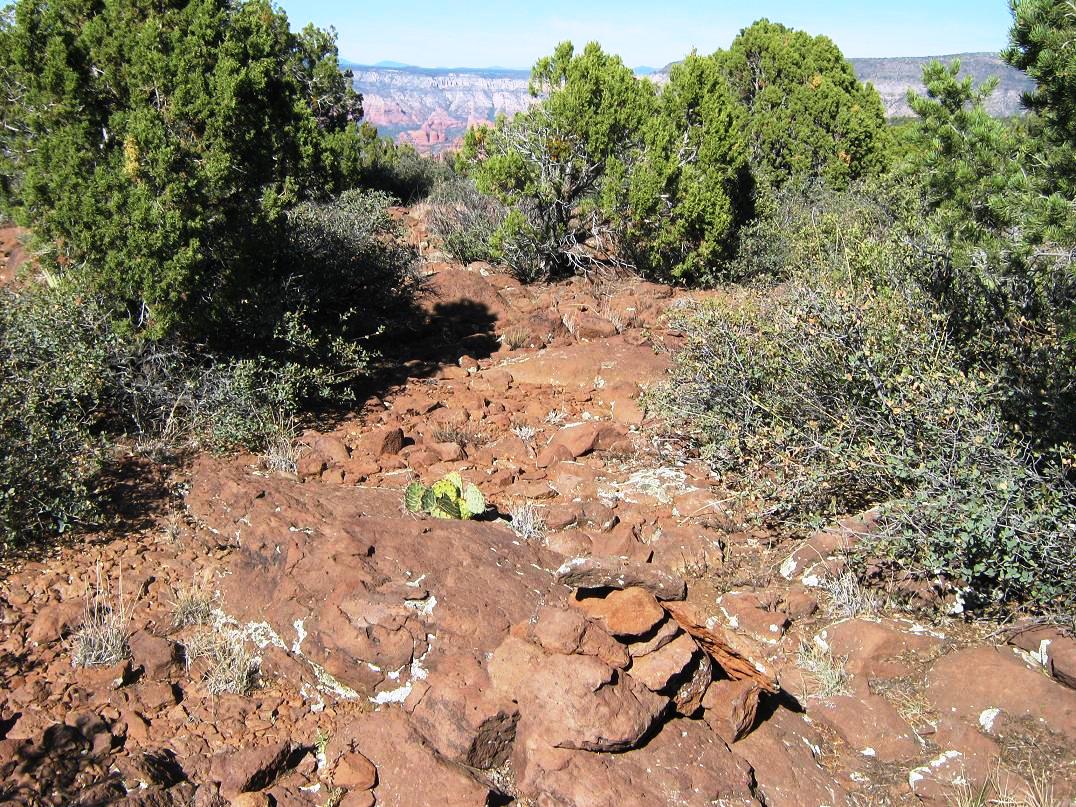
The last half-mile to the summit was cross-country, through the same wooded terrain, but open enough to allow me chances to track my location. It would be very easy to get off on a wrong bearing on top this big mesa, which covers about four square miles. After a few minutes, everything felt right and I knew I was at or near the top. Not surprisingly, it s broad and wooded, but after a few more minutes I found a cairn, with some viewpoints to the north and west. I was amused to be the first person to sign in since 2009, the piece of paper containing the usual names I see on these remote peaks: Vitz, Macleod and Lilley, Nicholls, Scouras. So I added mine, for the amusement of the next visitor in about 2014.
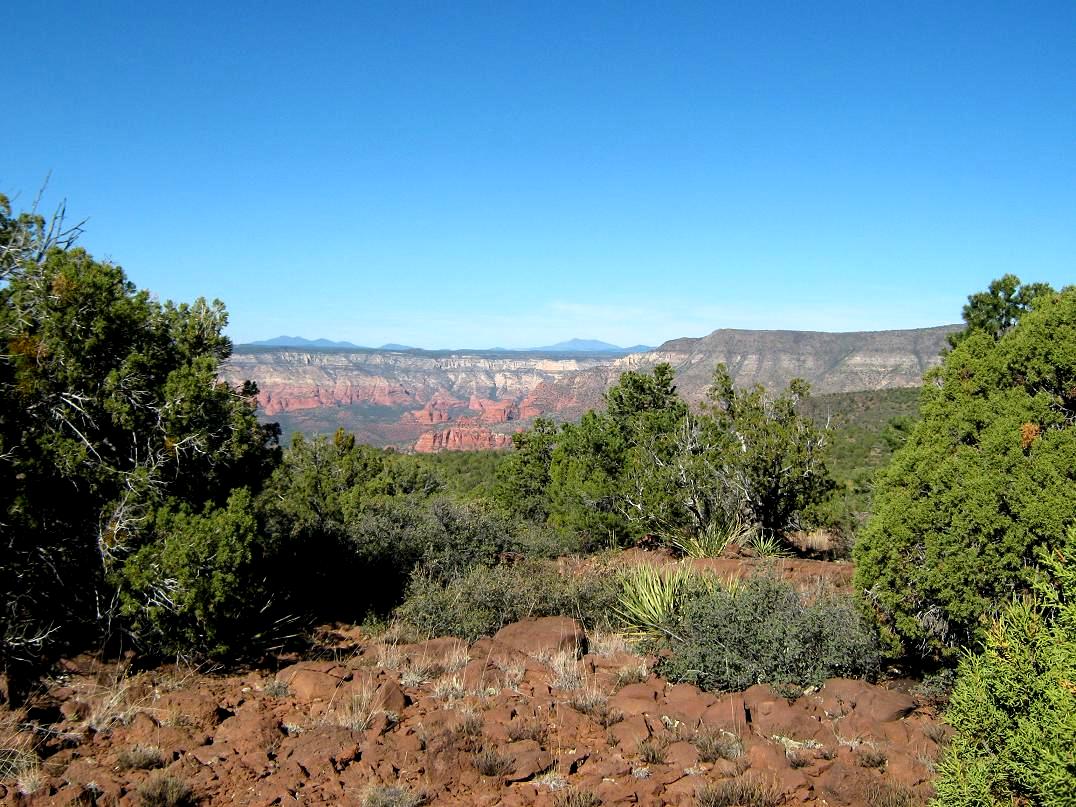
The views were tremendous. The "Big 4" volcano peaks on the Coconino Plateau stood high above the rim: Bill Williams, Sitgreaves, Kendrick and Humphreys. The sky was bright blue and the day gorgeous. Plus, it was slightly cooler up here. I figured a three-mile one-way hike, which I covered in slightly less than two hours, with 1,400 feet of gain. For that effort, I took ten minutes to relax at the summit area. Given I was expecting a view of trees, the views here were very lovely.
The hike down was quick, and I had no trouble finding my way back to the road. The sun was a little lower in the sky by now, enhancing the lighting for photography, the red rocks standing out impressively. Toward the bottom, two guys in an older Land Cruiser were rumbling up the road to the top. They were hunters and we had a short chat. They were cool. Back to my truck, more hunters were here and there on their ATVs. While this area may not see many hikers, it is definitely popular with the hunters. The whole round-trip journey covered slightly less than three hours.
Back in Cottonwood, I stocked up on supplies, had a dinner, then drove southeast toward tomorrow's objective, Hackberry Mountain in the Verde River Valley. I enjoyed my day on Black Mountain. While I doubt I'll rehike it, I would like to hike Casner Mountain someday and explore the roads that lead down into the Sycamore Breaks to the west. The country is gorgeous up here.
|

|