
The Mountains of Nevada
• www.surgent.net
|
| Arc Dome |
• Highpoint: Toiyabe Mountains • Toiyabe National Forest • Nye County |
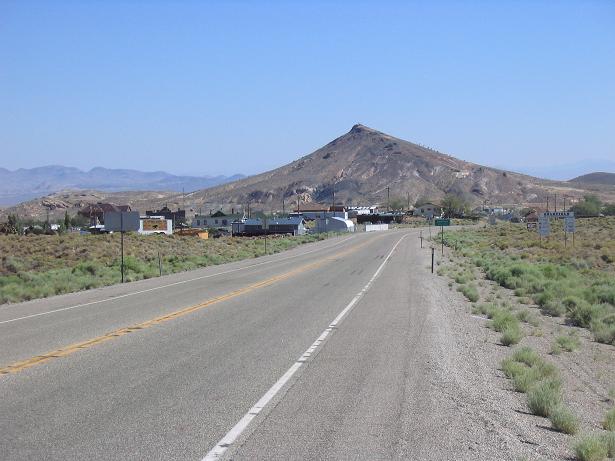
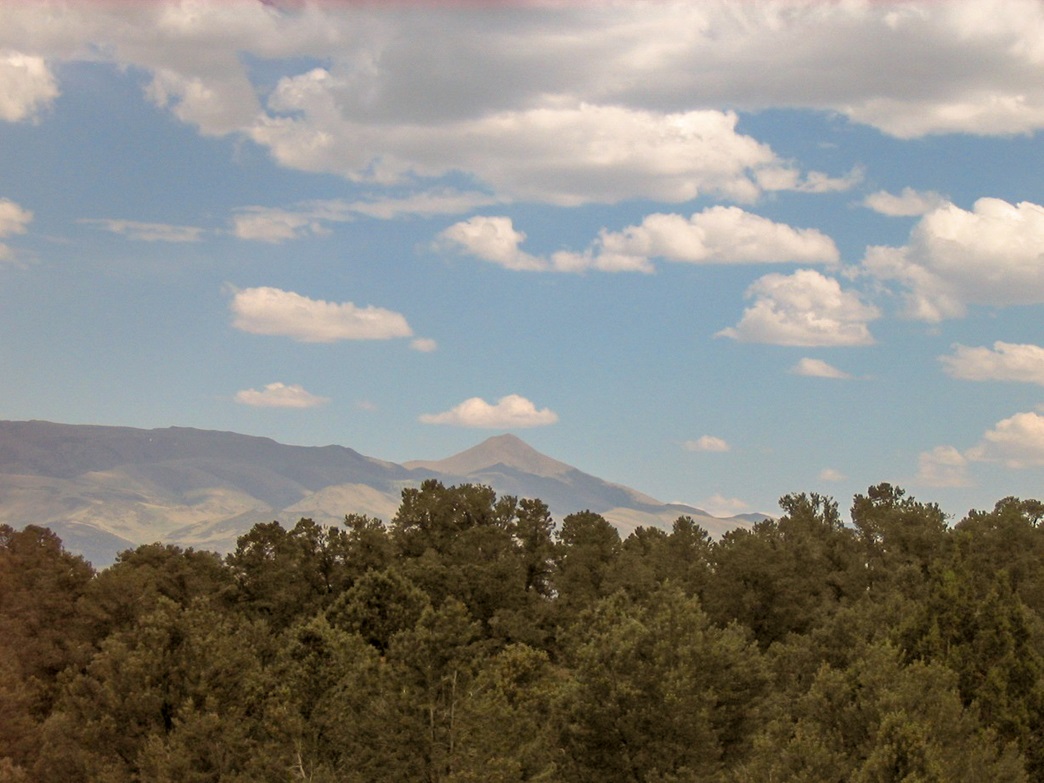 The unique summit of Arc Dome as seen from a long distance away, taken via zoom image
|
Date: July 30, 2008
• Elevation: 11,773 feet
• Prominence: 5,233 feet
• Distance: 14 miles
• Time: 9.5 hours
• Gain: 4,400 feet
• Conditions: Clear, but hazy with scent of smoke from distant fires
Nevada
•
PB
Arc Dome is the highest peak of the Toiyabe Mountains of central Nevada. It reaches 11,773 feet high and is one of 57 peaks in the mainland United States with over 5,000 feet of prominence. Arc Dome can be seen from far away, its symmetrical bare dome-shaped summit making it easily visible from a hundred miles away.
I learned of Arc Dome in 2000 when I climbed Mount Jefferson in the nearby Toquima Mountains. On the summit of Jefferson, I looked west at the interesting peak (not aware of its name) and later, checked it on the map. It became a "to-do" peak, but its one-way distance from my home kept it on the back burner for a long time. Whenever I got into central Nevada, I was usually concentrating on my county highpoints. This would be my first visit to the interior of Nevada since my completion of the Nevada county highpoints in August 2006.
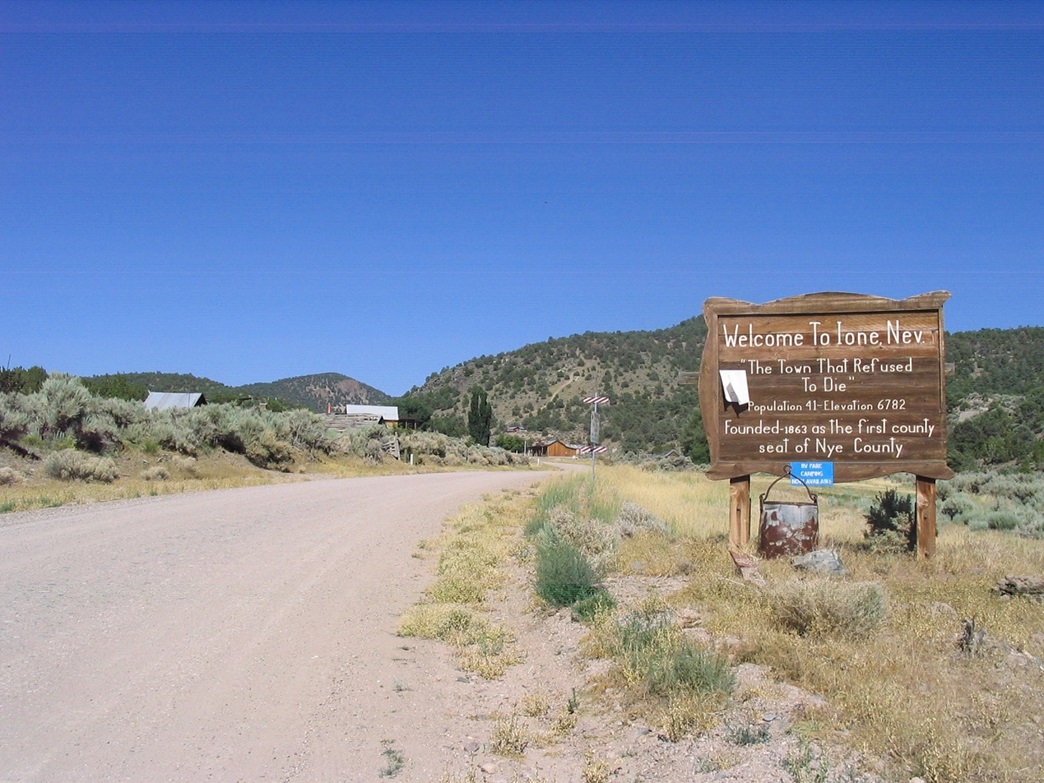
I left home and drove to my parents' place in Henderson, stayed the night, then the next day (the 29th), drove to the trailhead at Columbine Campground. I drove northbound US-95 to Tonopah (230 miles) then took a short-cut, leaving US-95 a couple miles north of Tonopah onto Gabbs Pole Line Road. This road cuts a straight line from Tonopah to Gabbs and appears to shave off about 80 miles than if I stayed on US-95 and took other state highways to Gabbs. It's paved for the first 21 miles, then graded hard-pack dirt for the remaining 40 miles to where it comes out near Gabbs. However, I turned off early, taking another gravel road north toward the Berlin-Ichthyosaur State Park. This road went north about 30 miles, then into the Shoshone Range through the little town of Ione (population 41), then down to the Reese River/Yomba Indian Reservation.
In the little Reese River/Yomba community, I took local roads and Toiyabe Forest Road 119 for 8 miles southeast toward Columbine campground. I arrived at 4 in the afternoon. Columbine is a small round-about in the road, ringed by four or five camp spaces. I took space #2, near the trailhead. When I arrived, I was the only person there but then a few minutes later two hikers showed up, having hiked from the other side of the range into Columbine. And not long later another car came rumbling in, this guy from Tucson. It was warm when I arrived but as the sun set, it became pleasantly cooler with a great sunset (aided in part by smoke from a large forest fire at Yosemite in California).
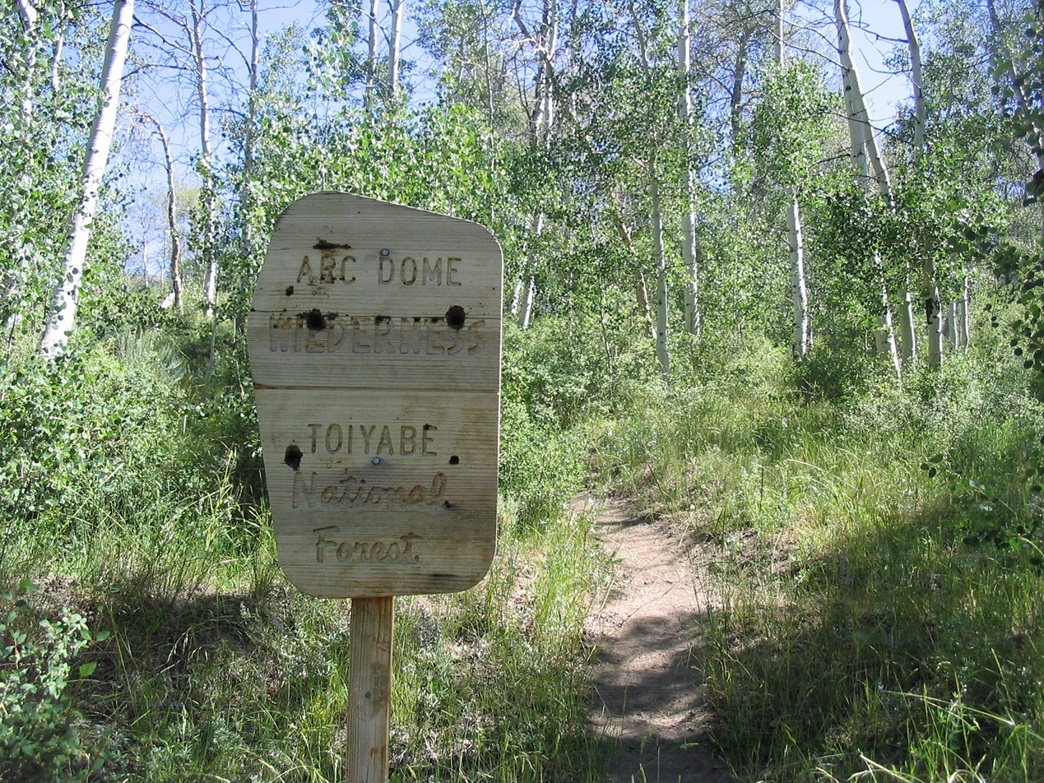
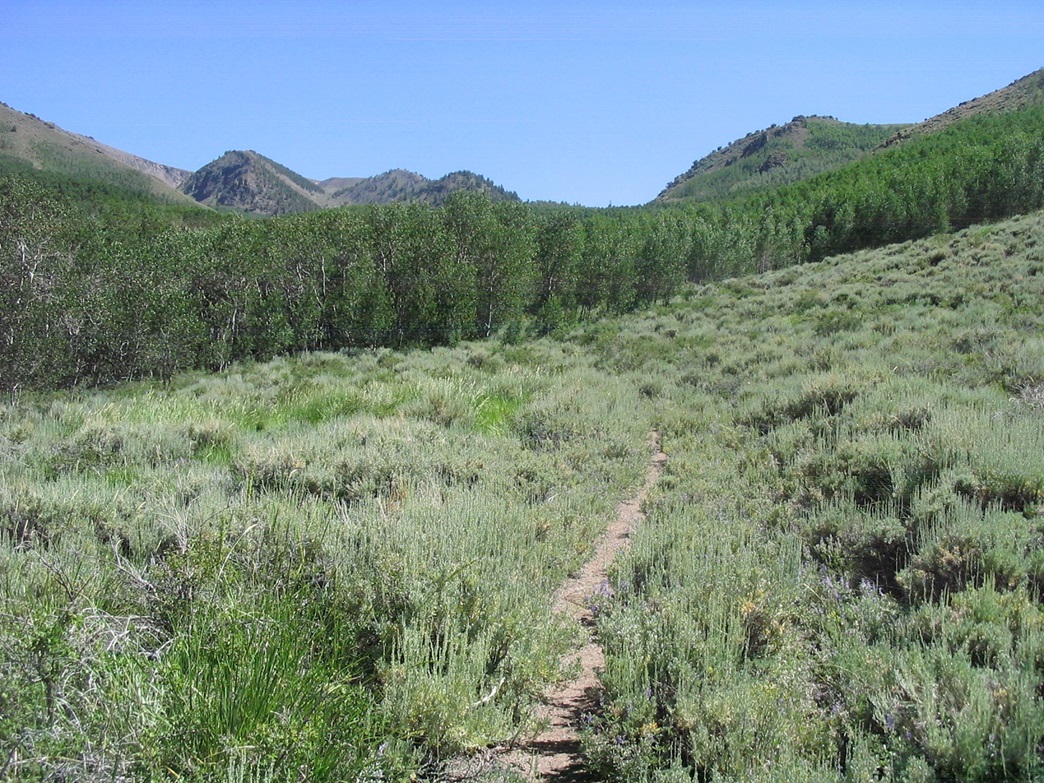
After a night's sleep in the bed of my truck, I awoke early and got my pack in order for the big day-hike. I started walking at 5:30 in the morning, trailhead elevation 8,700 feet, walking the few feet from my truck to the fence, then up the trail to the Arc Dome Wilderness sign. The initial mile or so stays low in the Stewart Creek drainage, passing through stands of aspen and open meadows of deep sage and grass. The Stewart Creek Trail junctions off from here about a quarter-mile into the hike, but I stayed right, planning to take the more direct "jeep route" trail to the summit.
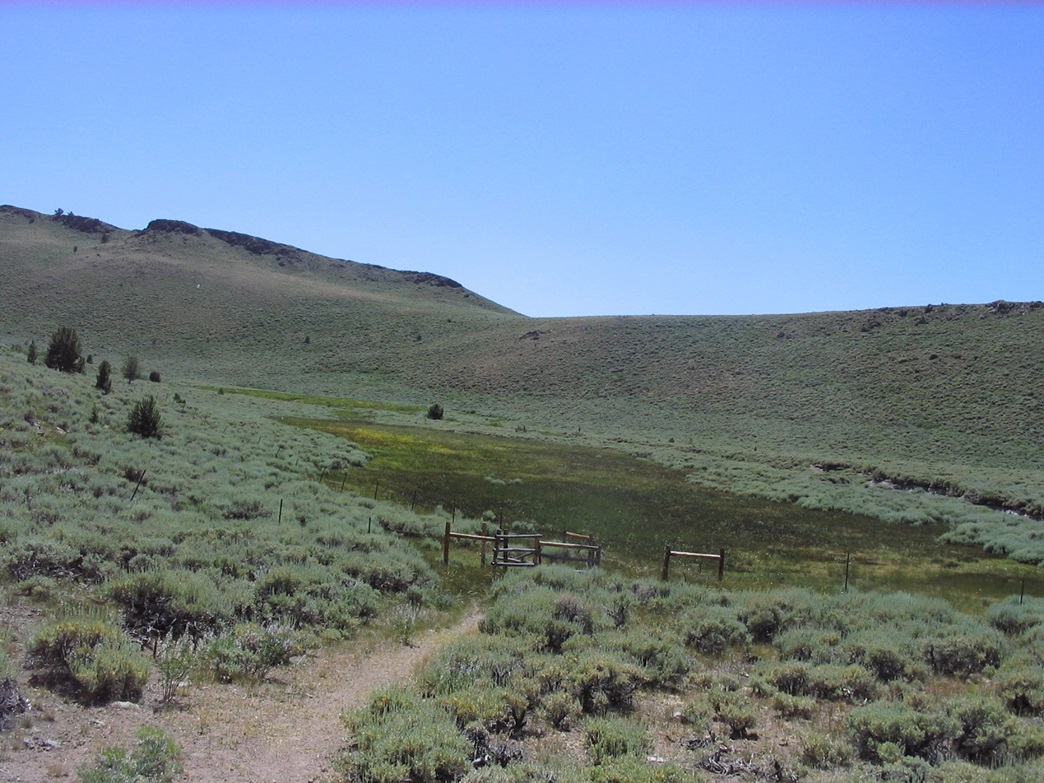
Hiking in the aspen, past visitors had carved in their initials and dates into the bark, which "scars" and preserves the dates and names after many years. Some dates were from as far back as 1921. The trail gains moderately and slowly leaves the forest, coming onto slopes of sage again at about 9,400 feet. Here, the trail mounts a small ridge that hems in a basin and meadow, which was fenced and probably was an old cattle pen at one time. I took my first break here, having covered about a mile and gaining 700 feet. The weather was spectacular, and I was still in shade. However, the scent of smoke was in the air, courtesy the big fire over at Yosemite. I could see the smoke as a layer of haze in the high atmosphere. Otherwise, the sky was deep blue and the sun was still low in the east.
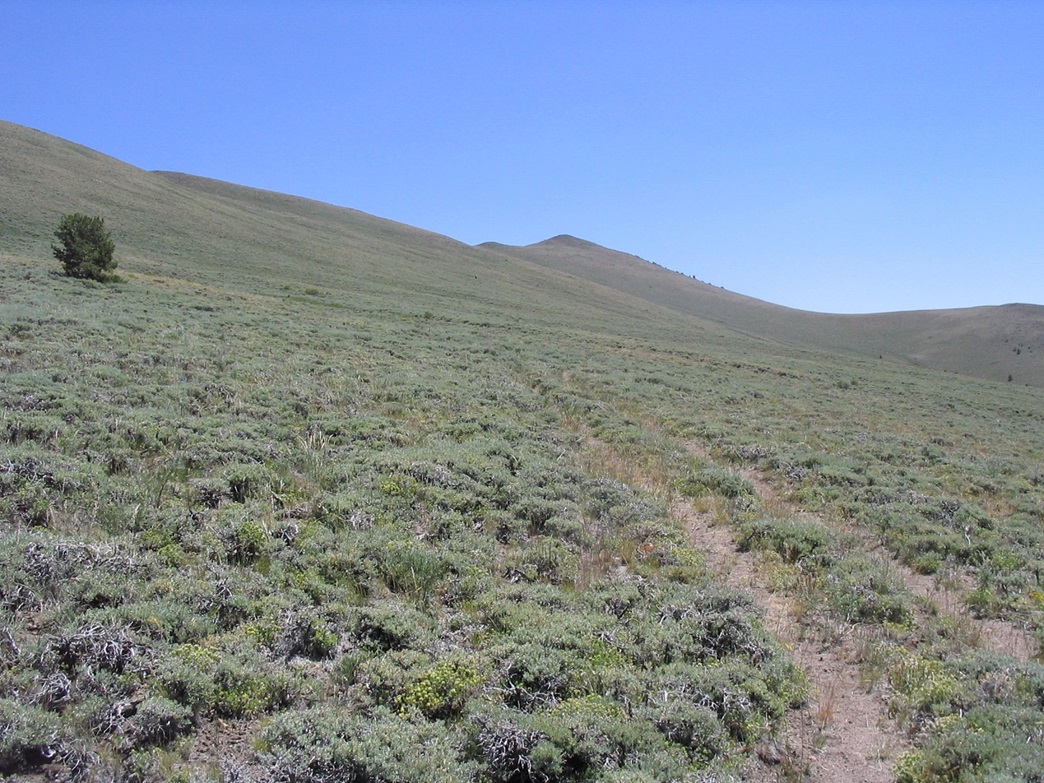
The trail drops slightly toward two wooden posts, then skirts left of the meadow, paralleling the fencing. The sage was thick here and the trail hard to follow at times. Past the fenced-in area, it crosses over a small brook, then swings to the right and gains up a more prominent ridge, elevation 9,600 feet. The map shows the "jeep route" to go west of the ridge, while the better trail goes left and more directly up the slope. I opted to follow the map and followed the jeep track, which actually looked like an old jeep track for the first time. This part went fast, and the track gained steeply up the bare slopes to re-meet with the better trail on the ridge, elevation 9,900 feet.
Now on an elevated bench of sage, I had million-mile views to the south and west, and the sun was just barely starting to rise above the ridge crest. I made good time on this section, which covers about 2 miles and heads generally south, making a very long and gentle gain up the slopes. I passed a "junction" of jeep tracks at about 10,300 feet, then started up the steepening slopes. This part was kind of sloppy and steep, but short, and in time, I had gained onto the upper plateau, elevations ranging from 10,800 feet to almost 11,400 feet.
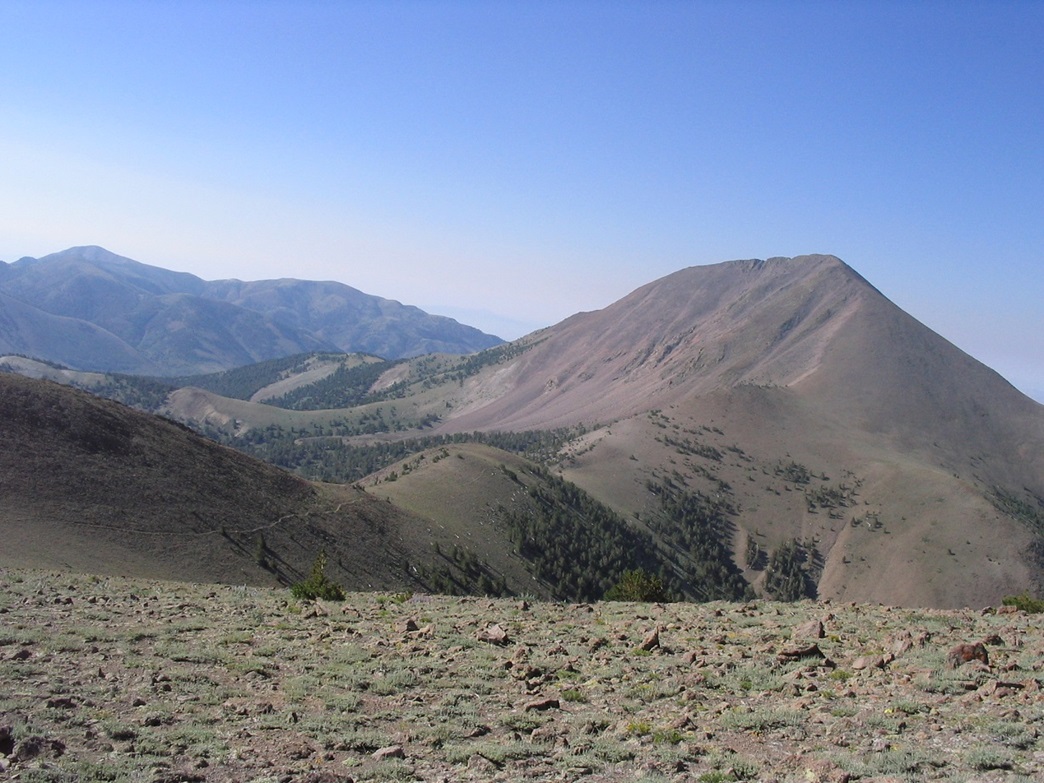
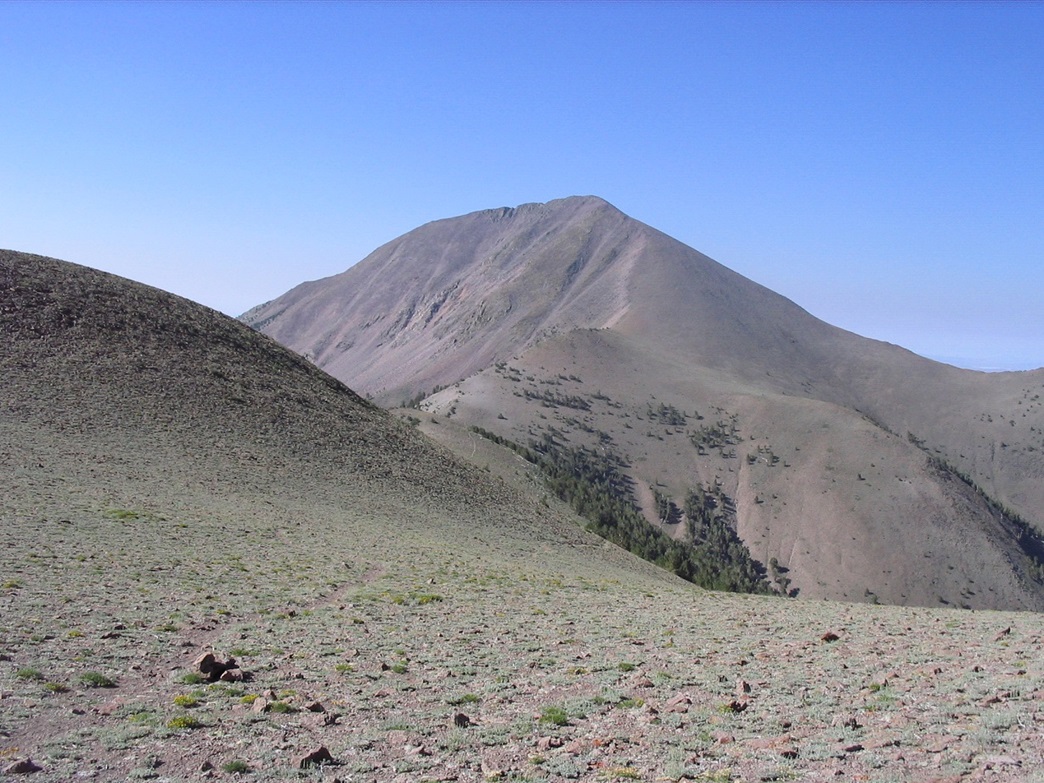
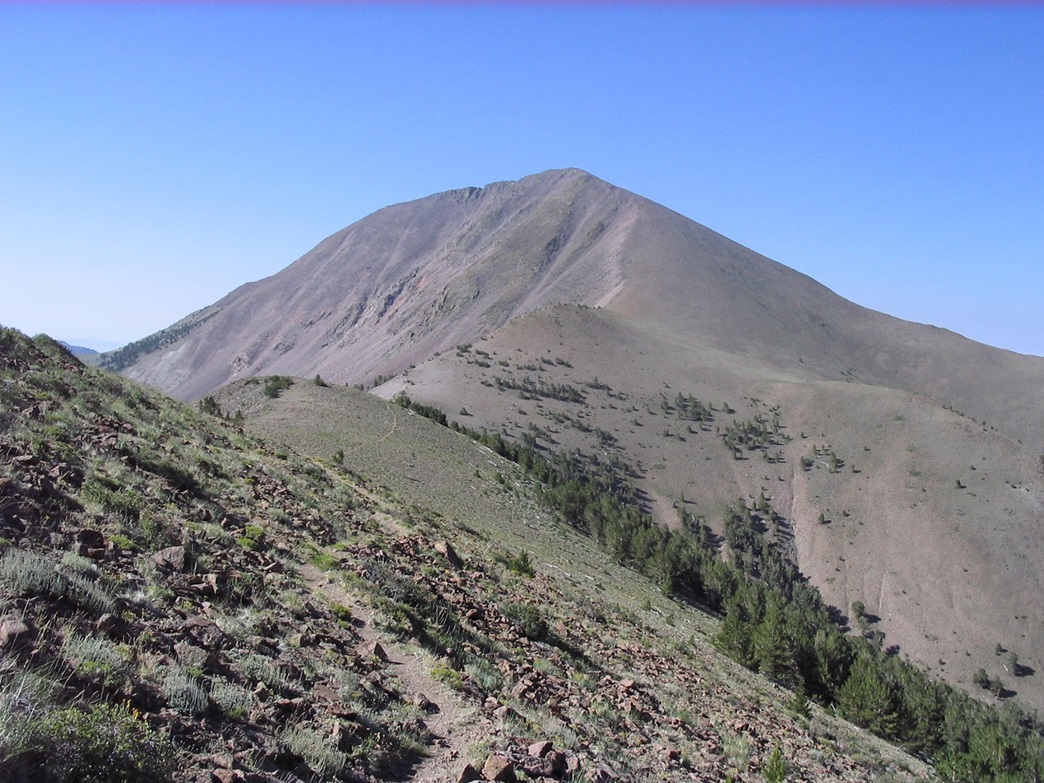
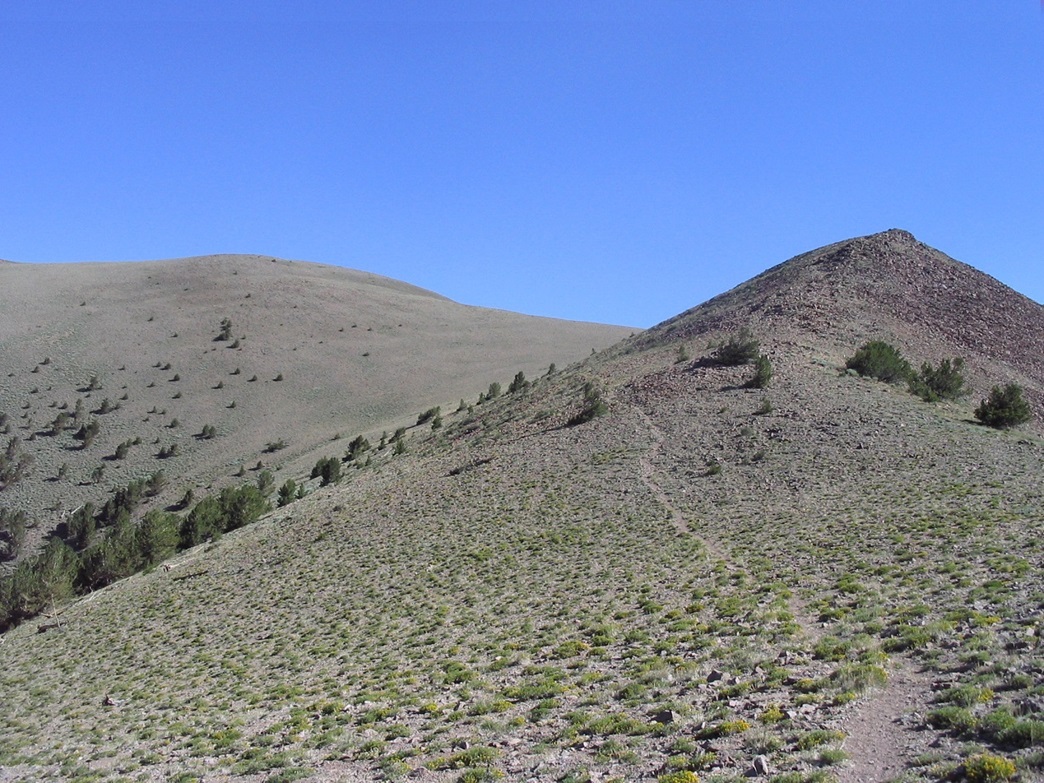
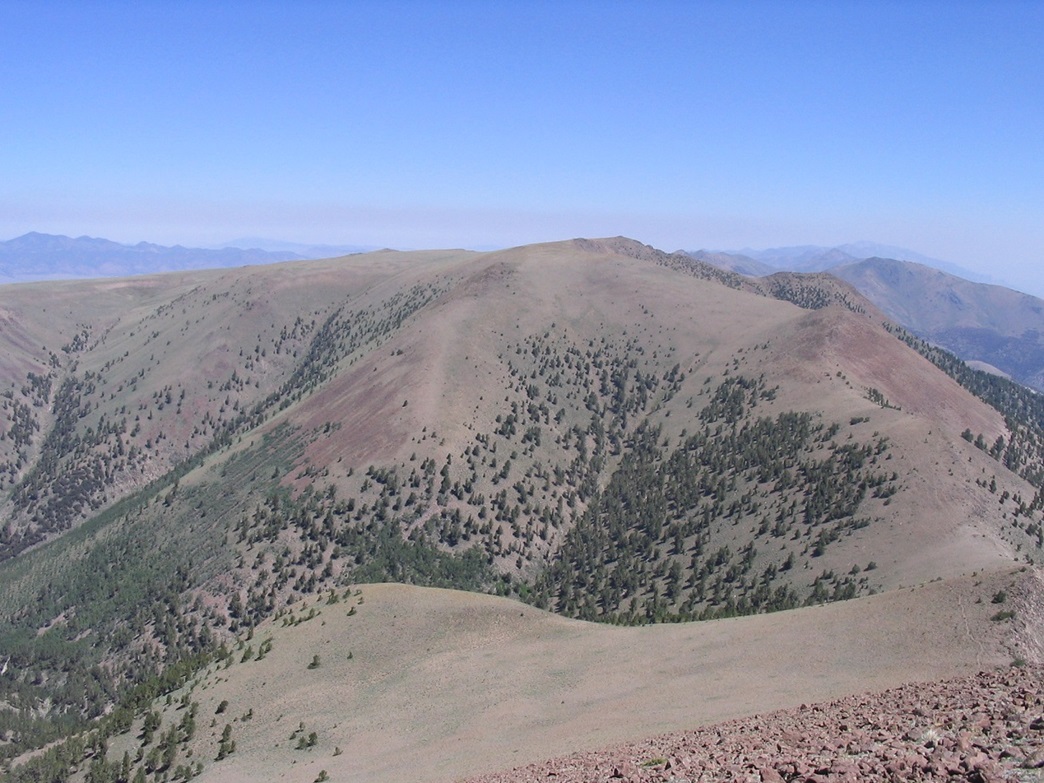
This broad "upper plateau" was barren other than low sage scrub and a few large rock cairns signifying important route junctures. I made excellent time here as well. The jeep track, now barely visible in the low scrub, meets with the main crest trail at approximately 11,060 feet elevation. Up until now, Arc Dome had not been visible. But as I hiked this upper plateau, it became more and more visible and impressive, then hidden again as I approached the highpoint of the trail on this plateau, at 11,200 feet elevation.
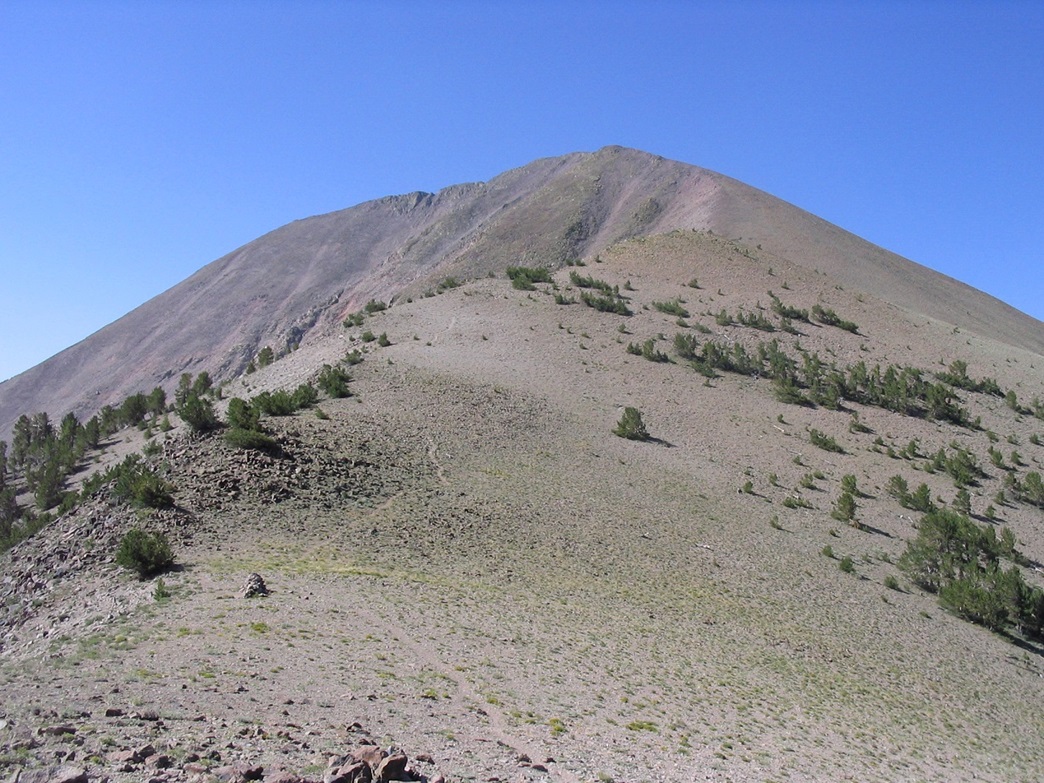
Finally, the trail began a gentle descent, in which it would lose about 600 feet in a mile to a saddle at 10,700 feet north of Arc Dome's summit. The views here were amazing. I made good time down this descent portion, arriving at the saddle and taking one last big break before tackling the remaining thousand feet to the top. It was about 9:30 a.m. and the weather was outstanding. So far I had not seen any of the other hikers from the campground on the trail. I took a long food and water break and changed out of my warmer clothing into shorts. I spent some time psyching myself for the last haul to the top.
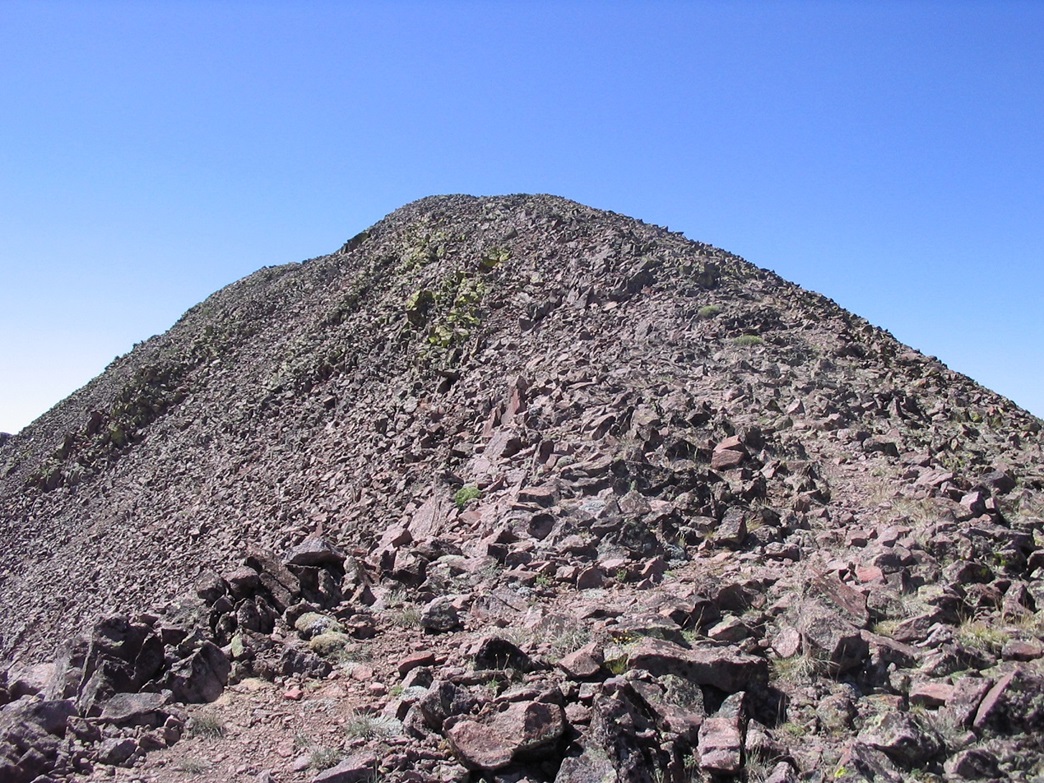
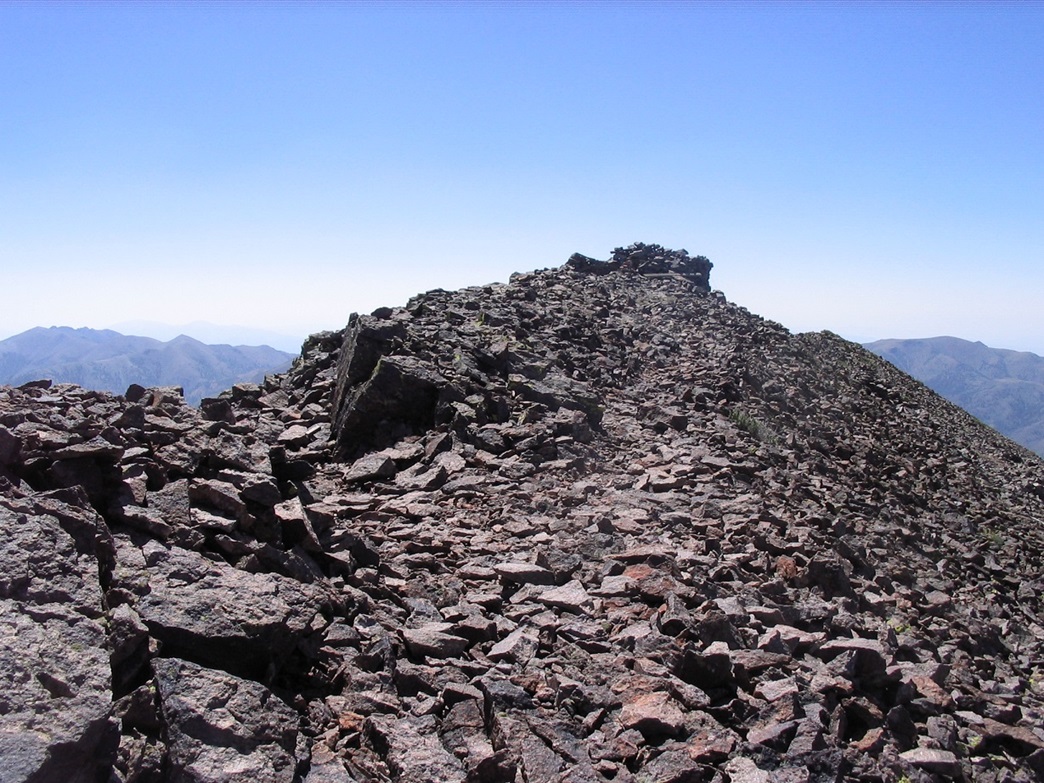
The last mile and thousand feet of gain to the top went well. The trail is steep, but well-maintained and a pleasure to walk. It makes about 20 steep switchbacks up the north slope, passing by low rock walls and cleared areas along the way. I left my pack for the remaining 400 feet, lightening my load. And finally, Arc Dome's summit was mine for the time being. The summit is a small flattish narrow ridge, the summit itself marked by a circular stone wall and a brick cairn, in which the summit logs were crammed into an old military-style strong box. I signed in and noted a few familiar names. I admired the views and snapped photographs. I arrived at 11:00 a.m., an ascent time of five and a half hours, which for me wasn't too shabby given I had been a lazy bum for the past two months. But I didn't stay long. In about five minutes I started the trek down. I picked up my pack and descended to the saddle in about 20 minutes.
At the saddle I sat in the shade of a lone limber pine tree, and stared up at the 600 feet I needed to gain to get onto the upper plateau. After hiking eight miles and gaining 3,800 feet, and having the summit done, the last thing I wanted was another 600 feet of uphill to go. On the plus side, the slope was pitched leniently and the trail was fantastic. I was getting pretty beat by now. However, past this uphill portion it was all nice gentle downhill from here on out, and I had a nice walk the entire way to my truck. The sun was high now and it was warm, even at 11,000 feet.
Coming down the slopes onto the bench I came upon the two backpacker guys, who were slowly heading upwards toward Arc Dome. I never did see the guy from Tucson. Anyway, I walked down, letting gravity assist me, and just kept at it until I got down into the aspen forests, where I took a break in the shade. I was surprised how hot it was getting. Even at 9,000 feet, it felt like it was the high 80s. I arrived back to my truck at 3 p.m. I took a few minutes to change and was driving out by 3:30. Yeah, I was pretty beat, but I felt fantastic and thrilled to have shaken the cobwebs from my hiking legs with this exhilarating hike up Arc Dome.
I retraced my driving route back toward Tonopah. I stayed at a cheap but clean motel, enjoying the odd vibe of the remote mining town. I was on the main street near a Mexican food restaurant, and after a 14-mile hike, I felt I could put away a combo plate without feeling too guilty. In case you're wondering, I did not stay at the Clown Motel.
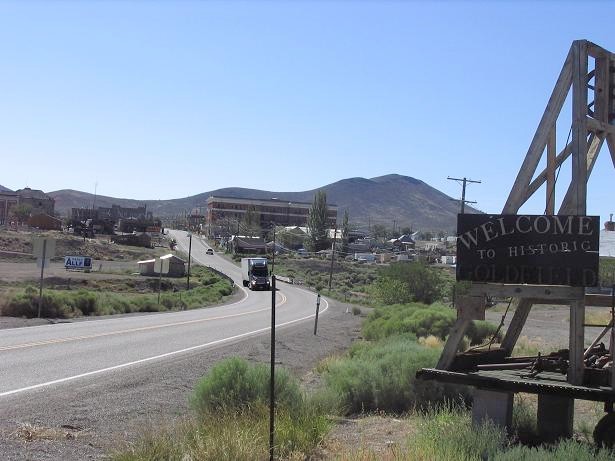
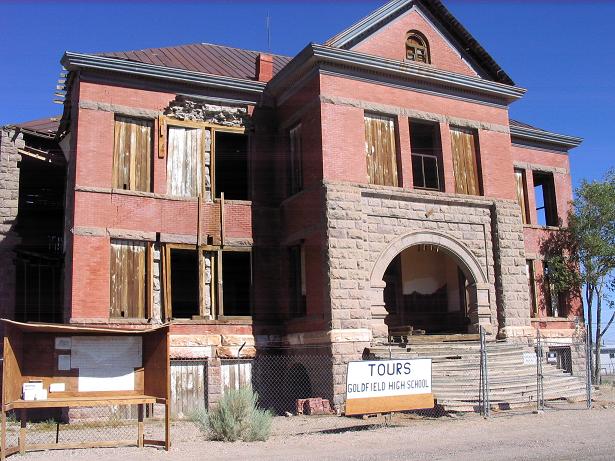
I drove back to Henderson the next day, but spent an hour exploring Goldfield, a small relic town about 30 miles south of Tonopah. Back in the early 20th century, it was one of Nevada's biggest cities, and some ancestors on my mom's side lived here at the time and stayed on. I would not be surprised if I shared some DNA with some of those oldtimers. These days, Goldfield is essentially a ghost town, but it is a functioning county seat, for Esmeralda County, so you see the official county buildings plopped amid the old decaying buildings and trailers that make up Goldfield.
Back in Henderson I enjoyed some down time, visiting family and friends, wishing my mom a happy retirement. A few days later my dad and I went on a short journey toward Ely where I climbed my second of two big peaks for the week, Ward Mountain. |
|