
The Mountains of Arizona
• www.surgent.net
|
| Red Mountain |
• Patagonia Mountains • Coronado National Forest • Santa Cruz County |
|
Date: October 10, 2010
• Elevation: 6,373 feet
• Prominence: 1,398 feet
• Distance: 6 miles
• Time: 2 hours and 45 minutes
• Gain: 2,000 feet
• Conditions: Clear and warm
Arizona
•
Main
•
AZ P1K
•
PB
•
LoJ
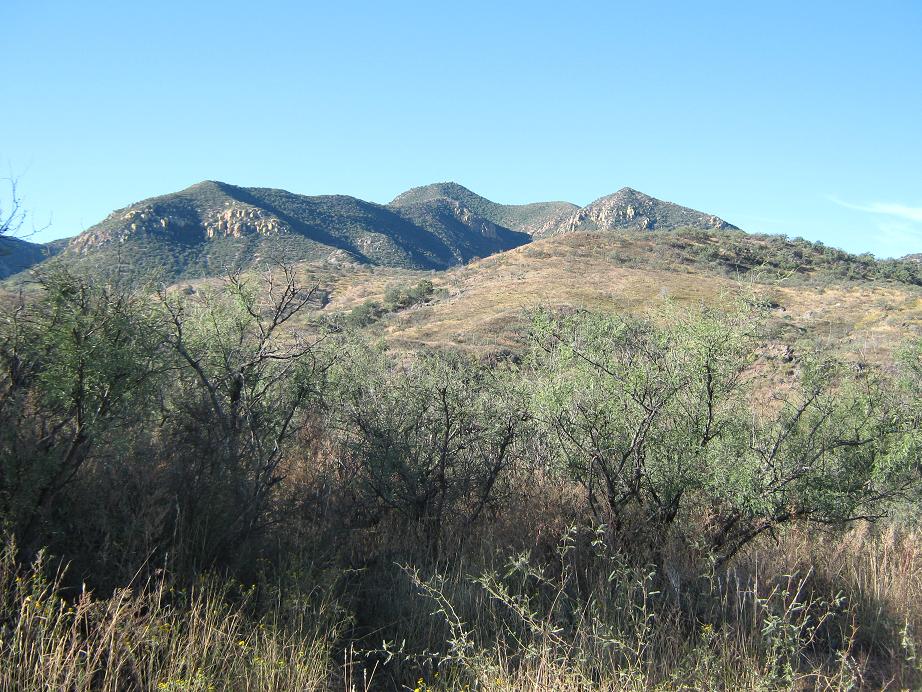
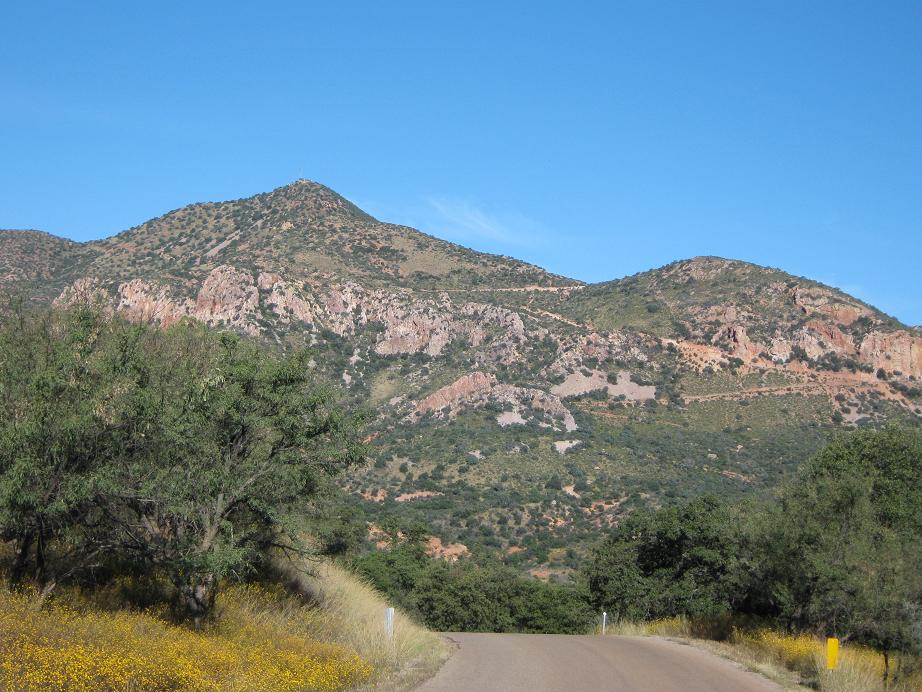
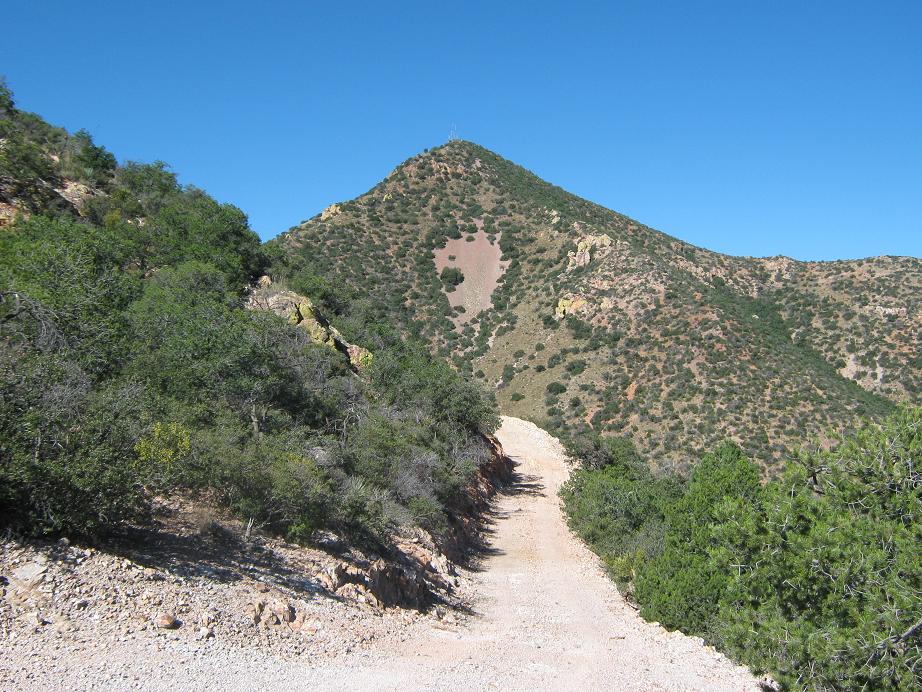
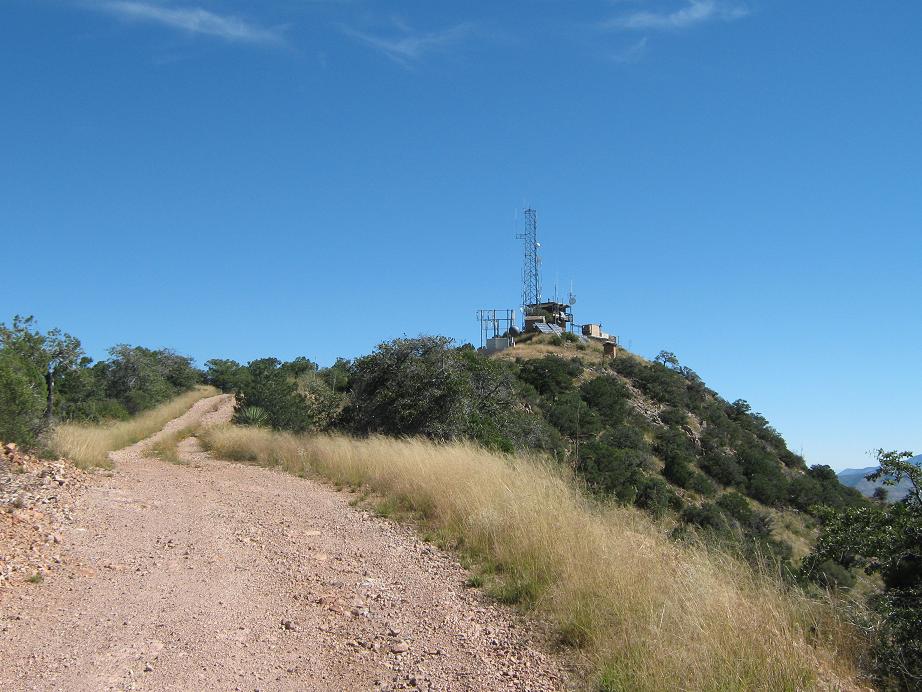
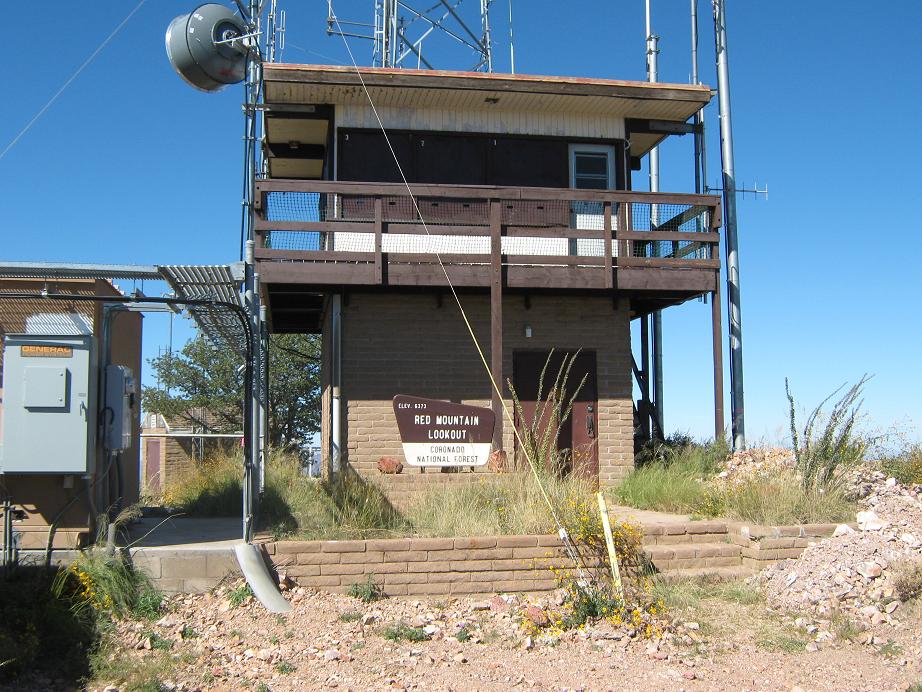
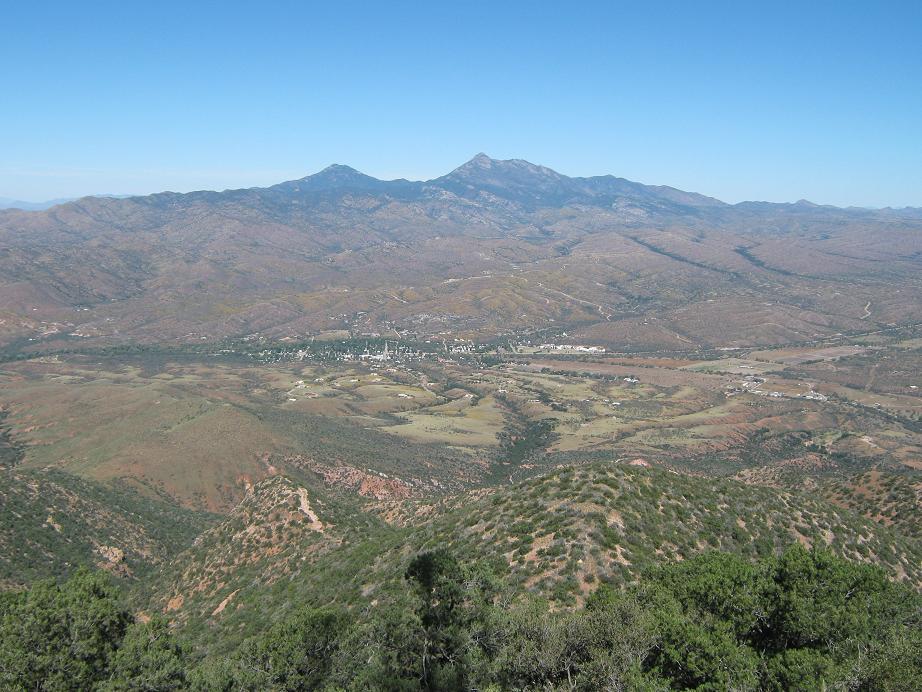
This particular Red Mountain is located in Santa Cruz County overlooking the town of Patagonia, about 25 miles northeast of Nogales. Red Mountain is southeast of Patagonia, rising over the valley and featuring a respectable prominence of 1,398 feet. The peak has a nice shape with steep lines and forest-covered ridges, while communications towers and an active forest service lookout are situated at the top.
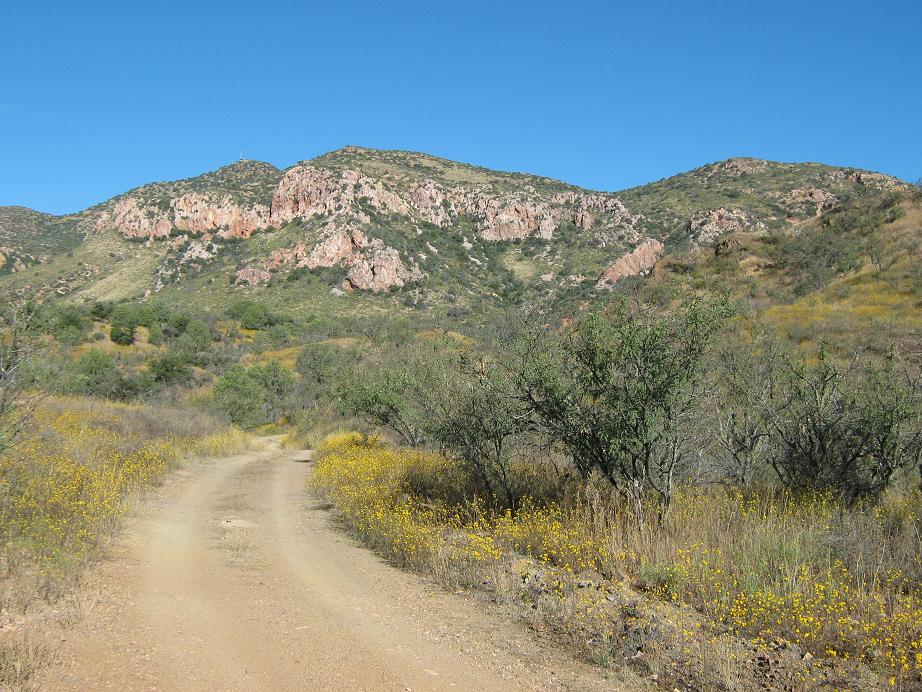
On the peak's south slopes, the vegetation is sparser, a mix of smaller trees including juniper and mountain oak, woody shrubs, flowers and grasses. There are cliff bands and interesting natural rock formations in shades of red, orange and pink. It's a surprisingly pretty mountain.
I left home the day before around 4 p.m., got supplies in Tucson, and by the time I exited onto State Route AZ-83, it was dark. I drove south on AZ-83 to the Gardner Canyon Road, Coronado Forest Road 92. I drove in and was able to score a nice camping area, rolling in around 7:30. There were other campers strung out along the road but they were far enough so as not to be seen nor heard. I hoped for a quiet, peaceful night.
About 9:30 p.m., a number of vehicles start coming in along the main road (I was about 4 miles from the paved state highway). Not one car, but three, four, even six, at a time. Where were they all going? The road dead ends up against Mount Wrightson, and there aren't any side routes (that I know of) connecting to other roads. This went on for two hours. I stopped counting at about 25 vehicles. My guess it was the Border Patrol staging themselves for the evening. I never saw the vehicles in the dark but the lights suggested official vehicles.
The night was cold, but I slept well in the bed of my truck under the down comforter. I awoke at dawn the next morning and stuck around a little while to get warm and let the sun rise higher. I was moving by 7:30 a.m. and exited onto the state highway into Sonoita then Patagonia, following Harshaw Road southeast for 4.7 miles to the junction with Forest Road 4649, the access to Red Mountain.
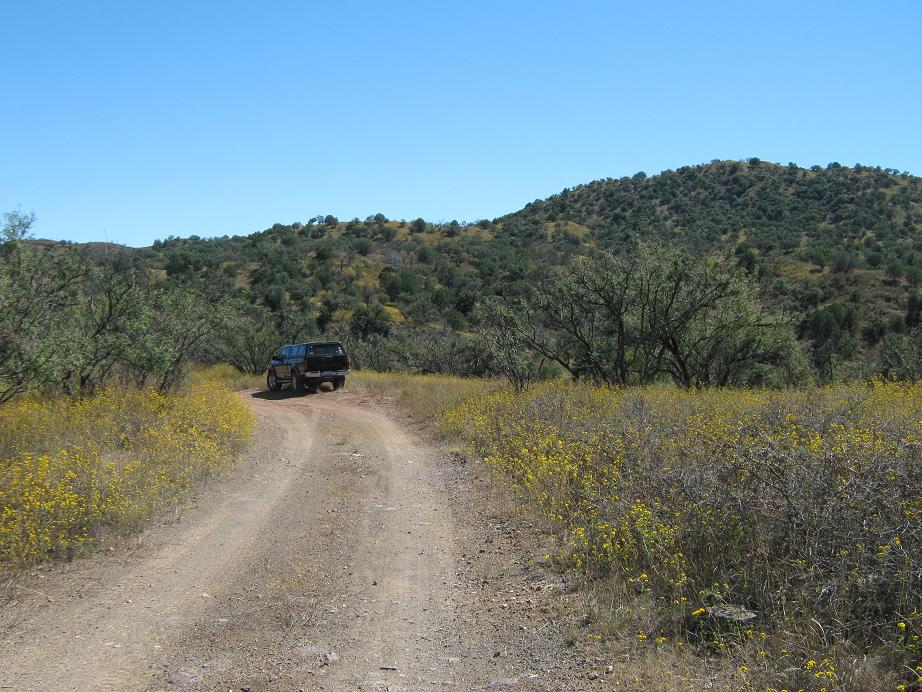
This road gets rough fast, and crosses a stream in about three places. There was ice in the small pools of water alongside the road. I was able to drive a mile along this road to where it bent right (toward Red Mountain) and up an ugly eroded section (needing 4-wheel drive) to gain onto a flat bench of land, with a clearing and a fire ring. I was sufficiently hidden from the main road so I parked, got myself ready, and started the hike at 8:20 a.m., elevation 4,500 feet.
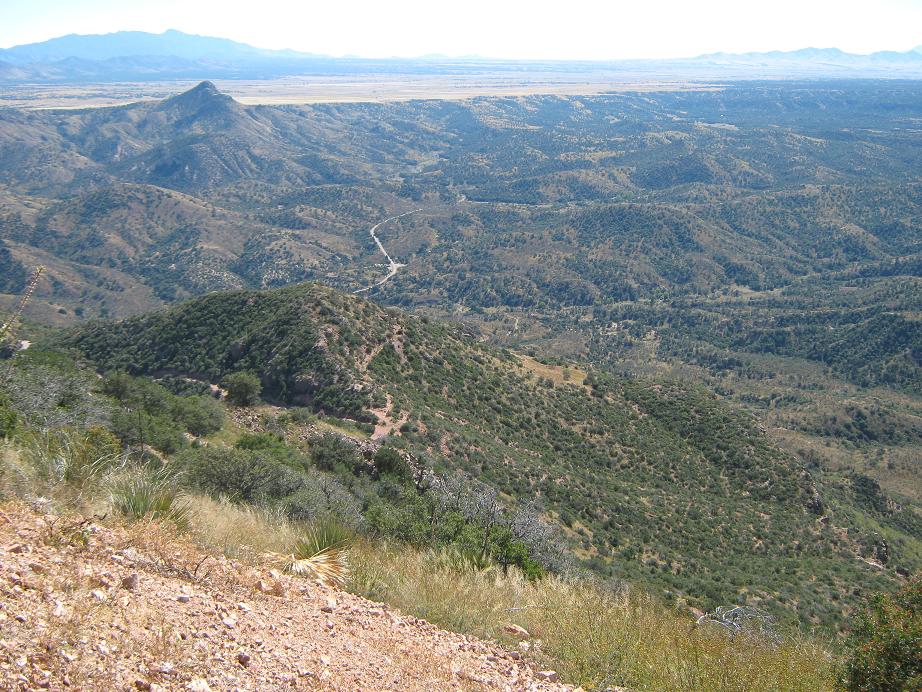
The summit and most of the route are visible from below. The initial half wanders through easy foothills. Then, quickly, the road steepens and starts up a series of switchbacks. After the cold morning, it had become quite warm. And buggy, too, including big fat three-inch grasshopper things that leapt right into me as I walked past them.
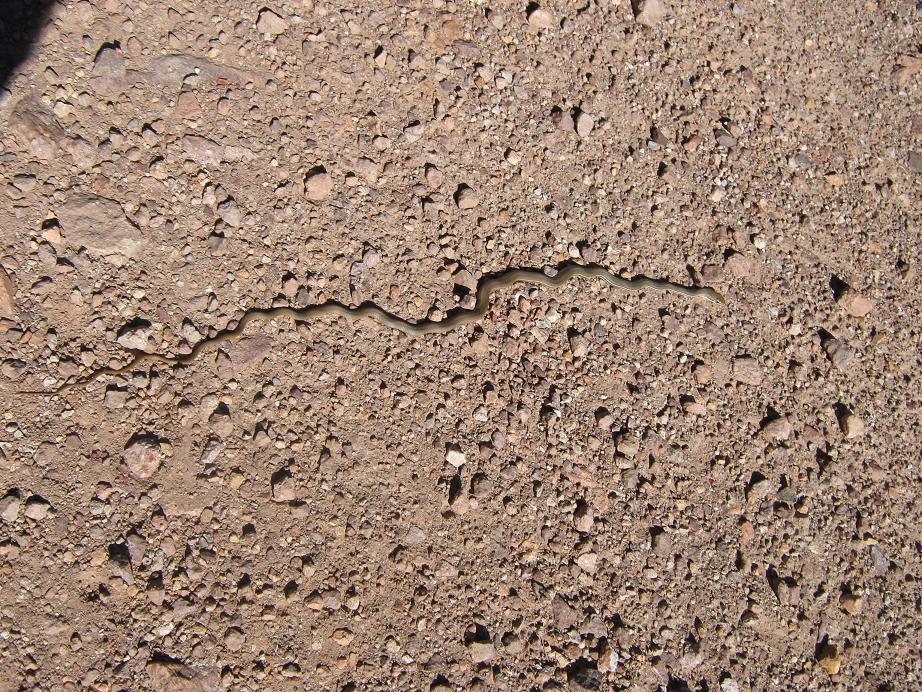
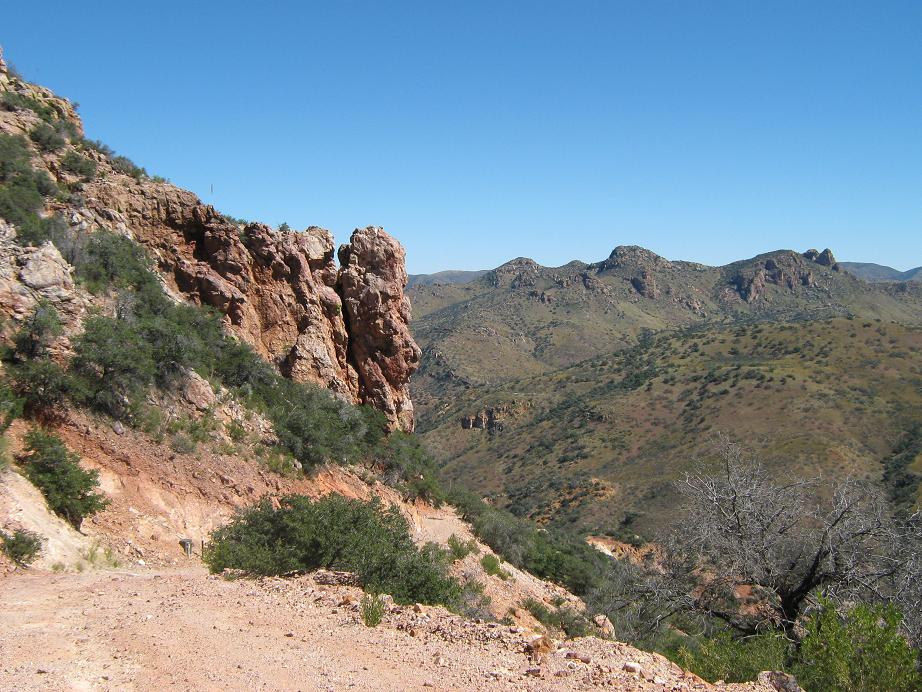
I made good time on the road and marched up the initial set of switchbacks, including one section directly below a huge rock pillar that looks like it won't be there much longer. I was aiming for a pass up ahead, and just before I got to the top, I came upon a thin snake sunning himself on the road. He was not poisonous, about 15 inches long but thin as a pencil. I took his photo, then he slithered into the brush.
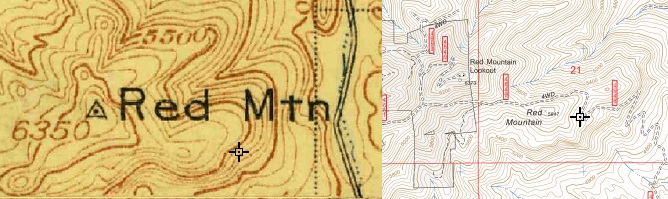
At the pass (elevation 5,535 feet), the summit comes into view once again, a conical-shaped peak covered in forest and open slopes broken by small cliffs. The road drops slightly, then traverses to the north of Peak 5,847 (which the topographical map has erroneously marked as "Red Mountain"). The road comes to the saddle to the west of this sub-peak, then continues west traversing below the main summit, finally coming to a saddle due west at elevation 6,060 feet. Hanging a sharp right, the road drops about 100 feet to a lowpoint near an old junction with an unused side road.
Finally, the road climbs again, comes to a gate, then bends one more time before the very top, where I arrived at 10:30 a.m., a two-hour ascent and 2,000 feet of gain. The weather up here was cooler and breezy, and all-around lovely. The air was dry and across the valley were Mounts Wrightson and Hopkins. Other peaks visible were the Rincons and Catalina Ranges near Tucson, the Sierrita Range, the big pillar of Baboquivari, the Atascosa Range, San Cayetano Peak near Nogales, and looking south and east, the Huachucas with Miller Peak, and a number of peaks off in Mexico. I spent a few restful minutes on a bench in the shade of the lookout tower, which was not occupied today. After ten minutes, I started the walk down.
The descent went well and took 90 minutes, the main issue being the sometimes loose rubbly rocks on the road. I slipped here and there, and mindful of a bad slip and sprain of my ankle from last year (which is still kind of weak), I had to be careful not to aggravate it again. I am proud to say I never actually intersected butt with road, but a few times it was a close call.
Back to my truck a little bit after noon, the heat had really kicked up, in the low 90s, and those grasshopper creatures were bounding into me every chance they got. I piled in the truck, exited back into Patagonia then into Nogales, then from there I stopped in Grass Valley for a lunch at an authentic ma & pa Mexican food place.
This had been a good hike. Most people who come this way for a hike usually head toward Wrightson (which is perfectly understandable). For the record, Harshaw Road continues south and eventually leads to the gorgeous San Rafael Valley, which abuts the border with Mexico (the old border crossing town at Lochiel is still there, with maybe 10 full time residents). Beth and I drove this loop back in 2004. As for "illegal smuggling" activity: Red Mountain is 14 miles by road to the border, but the area was crawling with Border Patrol vehicles. I did not feel I was in an unsafe area. Proximity to the border does not necessarily mean more threatening situations. I played it safe by trying to park out of sight, but I try to do this wherever I hike.
The name. To anyone living in the region, this is Red Mountain, full stop. However, the USGS map makers erred and placed the "Red Mountain" identifier on a smaller bump southeast of the peak.
The older topographic map from the 1940s shows "Red Mtn" clearly labelling the actual summit. Later maps show this tag being placed near a smaller bump. This is obviously an error that has persisted now for decades. The summit is now identified as Red Mountain Lookout.
|

|